Nicaragua
11th - 18th February
I’m writing this post from my hotel room in Bogota. I’ve been here a month now, much longer than the two or three days I anticipated staying here when I first arrived. A combination of work commitments, planning a reasonably big extension to this trip, car maintenance and a lovely young Colombian girl have kept me here, busy and content. At the time of writing, I’ve driven 26,000km, visited 10 different countries and I continue to have the time of my life.
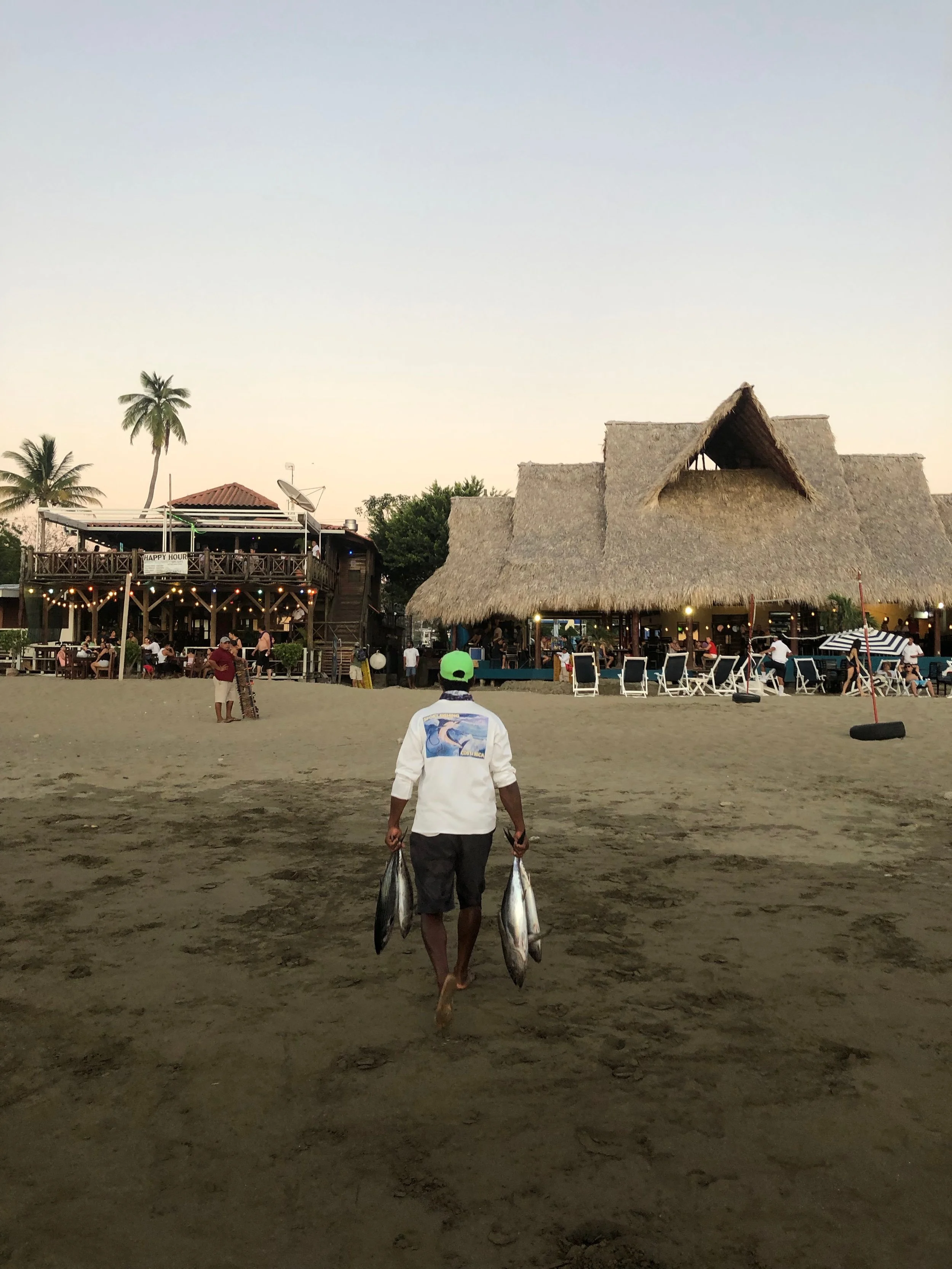
Successful haul after a day’s fishing in San Juan del Sur
A bad day:
With perhaps the one exception being the day my transmission shit itself in Mexico, the day entering Nicaragua was the worst I’ve had in my trip to date. I encountered a series of problems over the whole day that had me asking myself ‘when will these problems end?’.
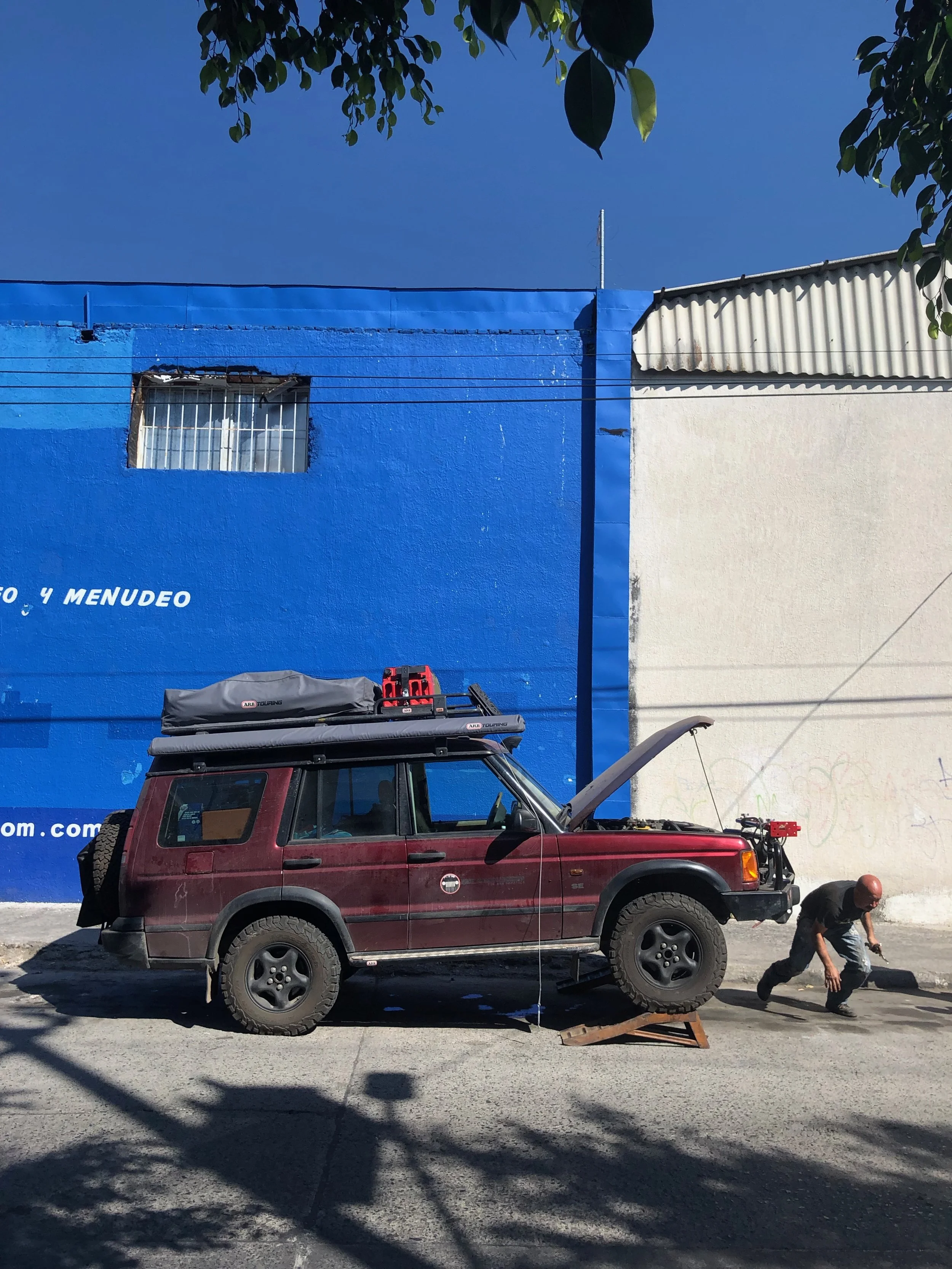
It started during my morning vehicle checks. While clearing the fault codes on the car which I assumed were just my recurring but benign O2 sensor problems, I noticed that amongst the faults was a cylinder misfire – a problem that had previously caused me over US$1,000 of repair costs and half a week of downtime in Colorado. Without a solution, I opted to reset the code, cross my fingers and hope for the best, but it nagged in the back of my mind as I set off for the Nicaraguan border, knowing that I was very far away from a Land Rover parts supplier.
On the drive out of Comayagua and within a few minutes of setting off, I was pulled over a police checkpoint and questioned for 10 minutes. They asked for my paperwork and seemed like they were looking for an excuse to extract money from me but thankfully they let me on my way after I gave them satisfactory answers and all the paperwork they asked for.
Once on the road, I followed the El Salvador border south towards the Pacific coast. I was stopped at the entrance to a closed highway – the only logical way to get me where I needed to go. Sitting at the barricade for a few minutes consulting Google Maps and trying to figure out what to do, the guy who had initially told me it was closed apparently changed his mind and waived me through into the construction zone. Not being sure if the road was passable to the Pan-American highway 50km further on, I pressed on. After more than an hour of battling my way through shoddy dirt roads and dodging excavation machinery and hoping I would pop out the other side, I eventually joined the pristine Pan-American and continued on south.
After a good stretch of the Pan-American highway, I eventually found myself at end of a long line of trucks and realised I was at the border (or at least a few kilometres from it). The following two hours were a horrendous experience battling confusion, swarms of people trying to take advantage of me and a seemingly endless import process in stifling heat.
A ‘tramitador’ (also known as a fixer or border agent) found me in line and asked me for my documents. Regrettably I handed him my passport and Honduras import permit and he immediately jumped on his bike and raced off. I followed hastily in my car trying to keep track of him, leaving the line of trucks behind me. After a five minute chase weaving our way through trucks and other parked cars, we arrived and parked near the border offices. He and his buddy on the Nicaraguan side rushed me between offices getting photocopies and handing in papers and stamping passports. While they did help with the basics of the border crossing, they also fed me a bunch of lies, were constantly yelling and very pushy, all the time making wild claims like ‘the border agents are at lunch, they need an extra US$20 to process your car’, ‘if you don’t bribe the inspection agent, you’ll have to line up with all the trucks’ and told me that because I didn’t do the online form before arriving, I would need to bribe another agent to solve that problem. They then asked me for insurance and fumigation money multiple times, pocketing it for themselves in the process. In all, I think I handed out US$160 in various payments between legitimate costs, expediency payments (bribes) and tips to the two tramitadors.
The border was hot, dusty and chaotic. Other tramitadors were yelling at me, kids were asking for money to watch the car ‘so nothing gets stolen’ and the border people themselves appeared to be taking a perverse pleasure in making everything as slow as it could possibly go. There must have been one hundred people sitting around who’s ‘job’ was extracting money from people like me. When I eventually crossed the border with my new import permit in hand, I was overwhelmed with what had just happened and worried that I wouldn’t have enough cash to arrive in Leon if my bank card didn’t work at the ATMs or the petrol station wouldn’t take credit cards.
Setting off from the border, I calmed down as I drove further on, thinking that the problems of the day were behind me. Then as I overtook a slow truck on a quiet country road, I realised he was slowing down because of a police checkpoint ahead. They immediately indicated for me to pull over and I knew that I was in for another drama with the police. The female officer pointed out that I’d crossed a double line while overtaking and that I would need to pay a fine. On the positive side, it was only 500 Cordoba or US$15. But as I was dismayed to learn, I couldn’t pay the fine on the spot and that I would have to drive 30 minutes to a police station in the next town while the police at the checkpoint held my driver’s license and paperwork. Not only that, they couldn’t adequately explain where this police station was. After a 10 minutes of doing my best to plead my case in Spanish and pay the fine on the spot, eventually I resorted to getting on my knees in front of the police office on the street, putting my hands together as though praying and begged for her to take my 500 Cordoba and let me on my way. Exchanging glances with her partner carrying a shotgun a few metres away, she gave in and I gave her the cash (presumably going straight into her pocket) and she handed me my license and papers and I got on my way.
I spent the rest of the drive through Nicaragua into Leon driving 10km/h less than the speed limit, driving meticulously and hoping that I didn’t encounter another issue before arriving. At this point, I literally couldn’t afford another bribe or payment with the only money I had on me being Mexican pesos. Angry and frazzled by the day, I eventually arrived in Leon, found my hostel and sought sanctuary there, not leaving the compound of the hostel for the remainder of the evening and acquainting myself with the local beers at the hostel bar.
Driving through all these countries, something I’ve learned is that while each has a fairly standard set of road rules which don’t really differ a whole lot, the important thing to assess when entering to a new country is the dimension by which a local population and the police adhere to the road rules. I’ve learned this can vary widely.
For example, in Mexico and Colombia, drivers don’t tend to pay any attention to speed limits which are frequently 30 or 40km/h on major highways. I was faced with the awkward situation when first entering Mexico when I had to decide whether the drive at the posted 30km/h and hold up traffic or go with the flow of traffic doing 100km/h, exceeding the limit by 70km/h, while driving next to (and at times overtaking) police cars who apparently did not care (although I couldn’t help but feel that if they wanted to make some money, could simply pull me over explain that I was doing 70 over). I learned the hard way coming into Nicaragua that they are very compliant drivers and that police are on the lookout for those who aren’t rigidly adhering to the rules.
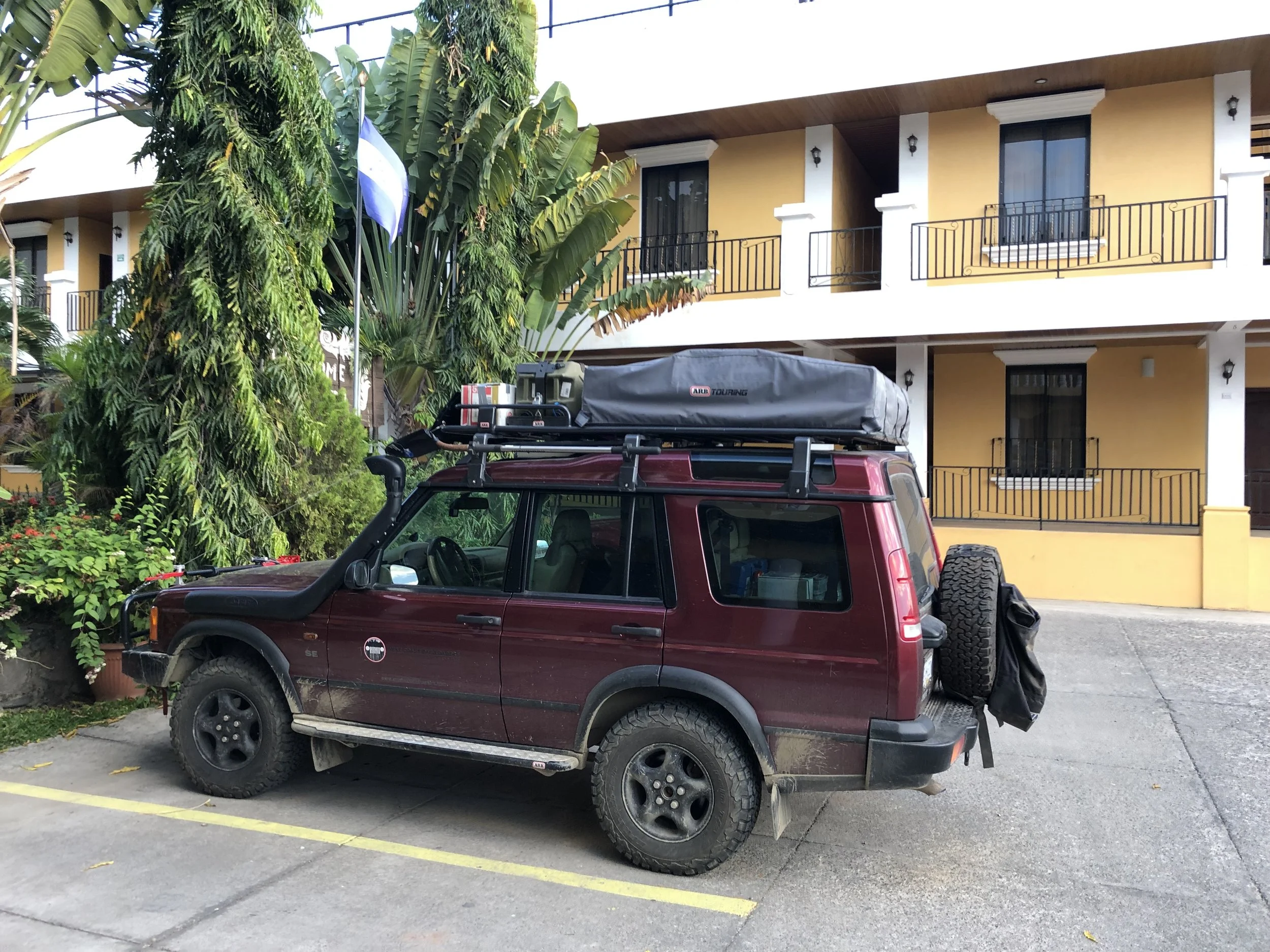
Leaving Comayagua and noticing a misfire issue, something that I thought I’d left behind in Colorado
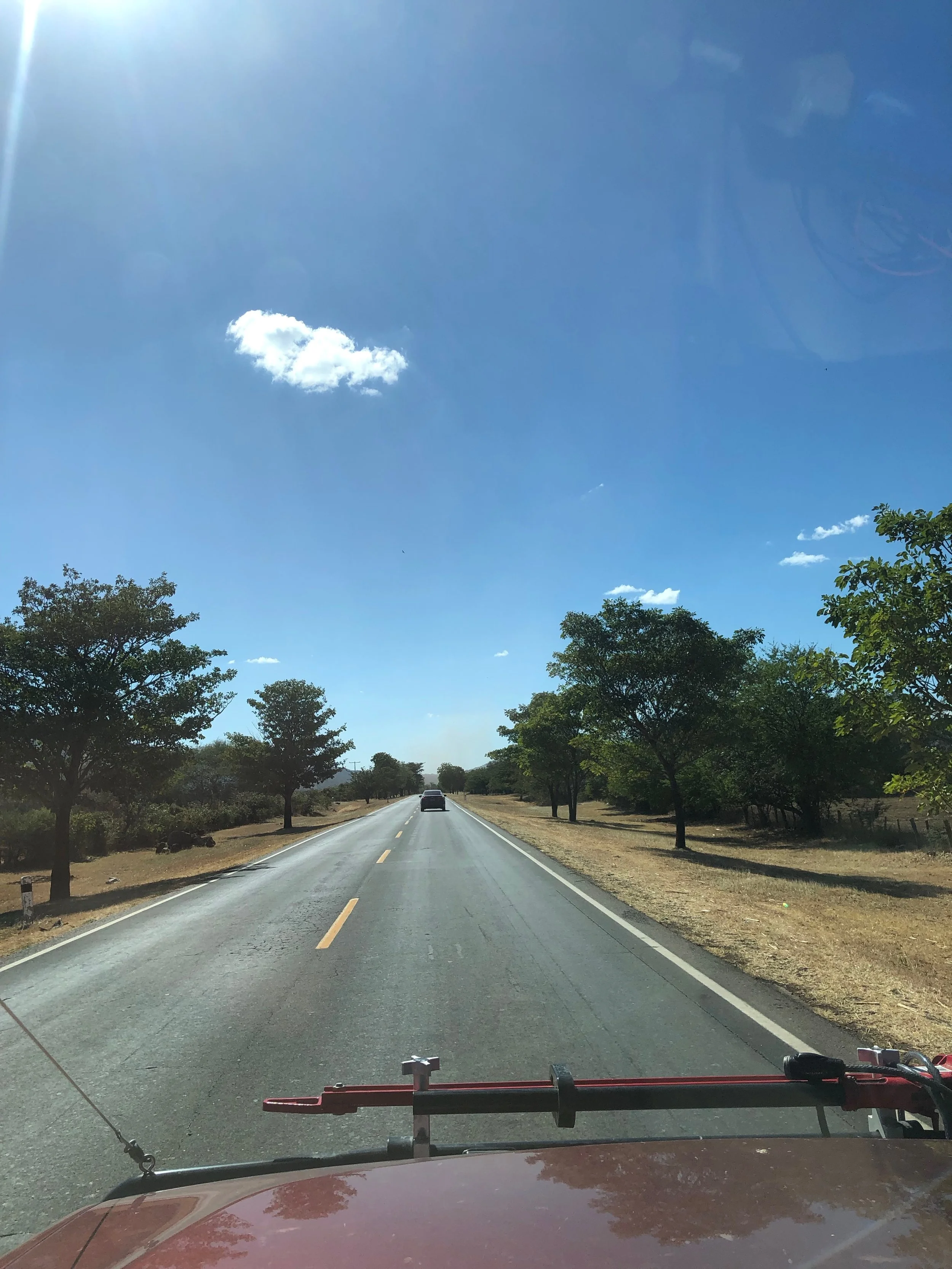
Nicaraguan road to Leon. This was taken moments after entering the country and moments before my first run in with the Nicaraguan police
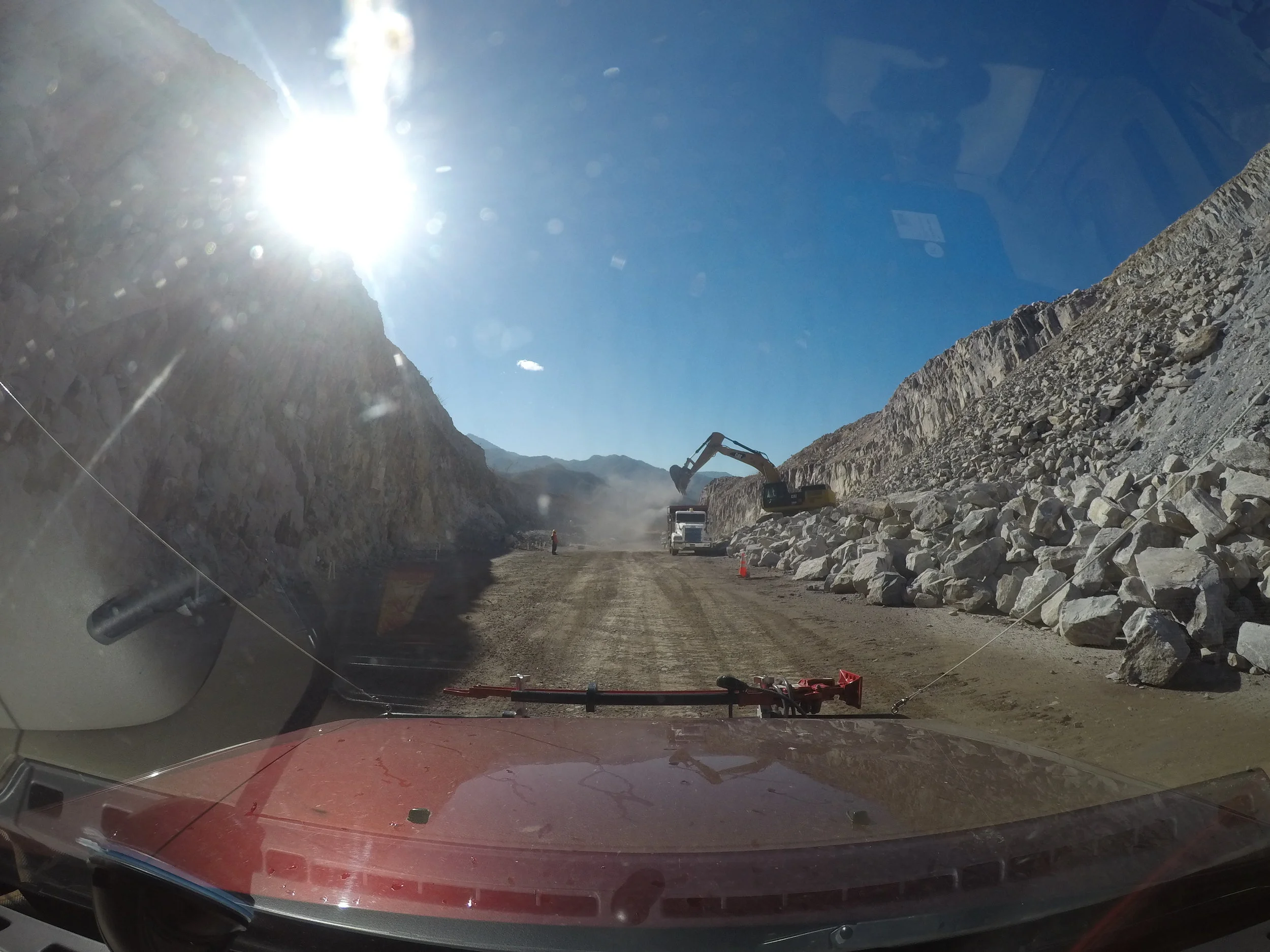
Navigating a closed highway. I drove through 50km of this, all the time hoping that the highway would eventually join up to Pan-American highway (which it eventually did)
Leon:
After trying to keep to some pretty aggressive timelines on the road, getting Hadyn to his end destination and on a plane back home, and constantly moving from place to place, Leon was a chance to catch my breath. Thankfully the hostel I chose was run by an awesome Belgian guy named Lieven and we got along great. He’d recently bought the hostel in the past year and was doing his best to keep the business running profitably despite a really strong headwind from the political issues Nicaragua had suffered in the past year. His timing couldn’t have been worse, taking ownership of the business literally as the protests of 2018 were shutting down the city and drastically curbing the inflow of tourists to Nicaragua by more than 90%.
Over the course of three days, I got to know Leon reasonably well and made a point to learn what I could about the history of the country and getting various locals’ perspectives on the current political climate. In short, things are screwed up there. The current issues began in April of 2018 when the Ortega government decided to ‘reform’ social security (i.e. stop making essential social security payments, mostly pensions to the elderly). Protests ensued with students, the elderly and activist citizens taking to the streets to march in their hundreds of thousands across the nation. The Ortega government responded violently, using live ammunition and killing many.
Subsequently, the paranoid Ortega administration has been systematically oppressing those who participated in the protests and those who are actively and vocally critical of the government. People are being arrested for their involvement in protests, people are mysteriously disappearing, freedom of speech is being suppressed and those critical of the government fear for their safety. I spoke to many people who had close family – nephews & nieces, husbands & wives, uncles & aunts, brothers & sisters – arrested and jailed or who had disappeared in connection with their involvement in the protests or from voicing their opinions on social media. It’s to the point that I won’t name or even vaguely refer to those I spoke to on the political issues of the country because I fear it could put them in danger.
The country is due for an election and the increasingly young population would no doubt turf out the current government should an election be held but it didn’t seem like that will be forthcoming. The pent-up frustration of the people makes me believe that the protests of 2018 will be repeated and the until there’s major change, the country will remain politically unstable. Historically, Nicaragua averages 10 – 13 years between major political turmoil (civil wars, uprisings, overthrowing governments) and seems they are due for another. I worry for Lieven and his business, the people of the country and feel especially those who have lost family members in the past 12 months just for voicing their discontent with the politicians in charge.
Otherwise, the city of Leon was a beautiful example of a colonial Latin American city. Lovely architecture, churches, cobbled streets, lively markets and one of my favourite cities on this trip so far.
Dajana (a German who I met in Semuc Champey) eventually joined me from El Salvador after not overly enjoying how dangerous it was and that you couldn’t leave the hostels after dark. She struggled through the same border that caused me grief (as many people I have subsequently found out also did) and we headed off south through the country together.
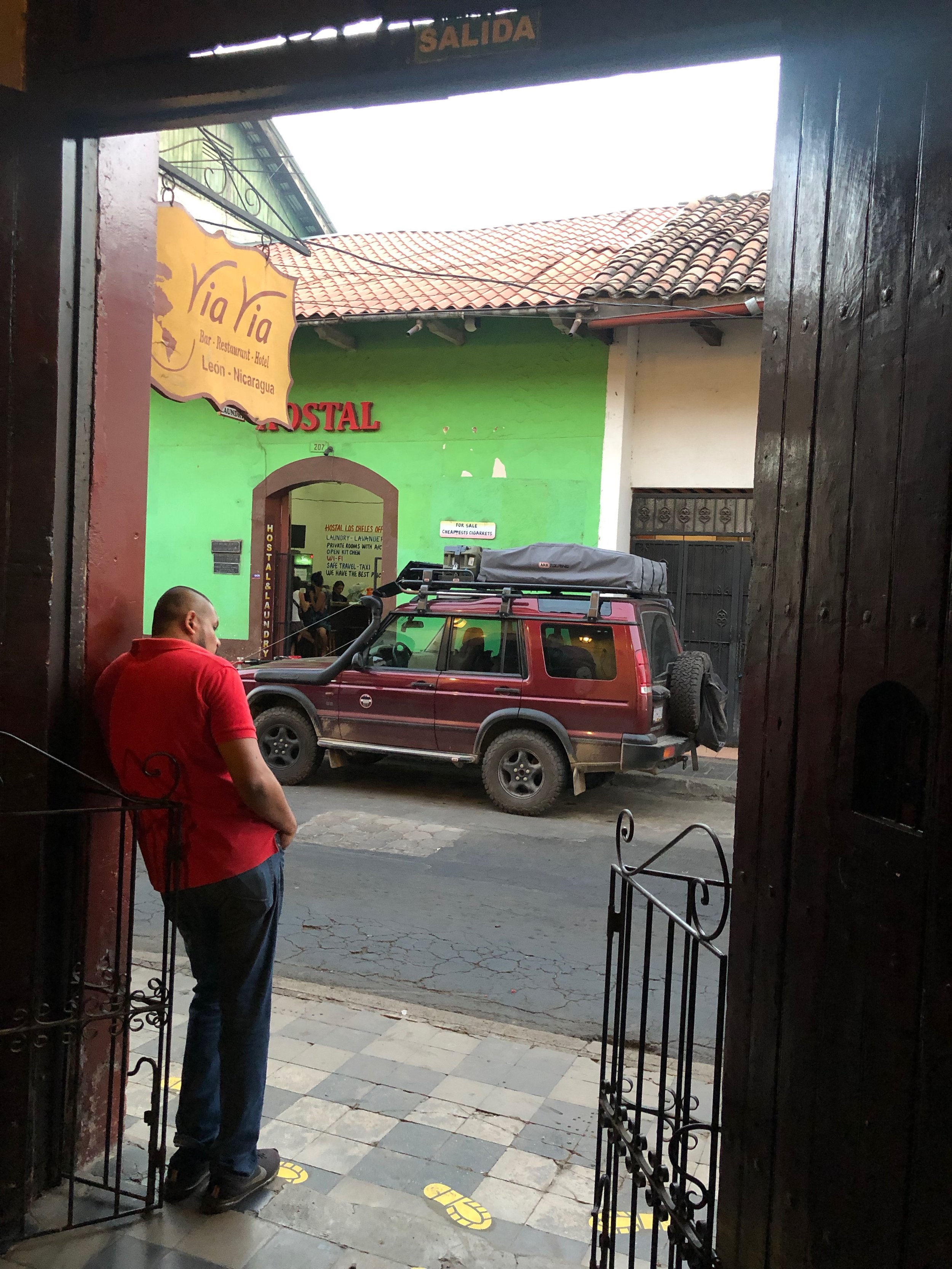
Keeping an eye on my car from the hostel bar
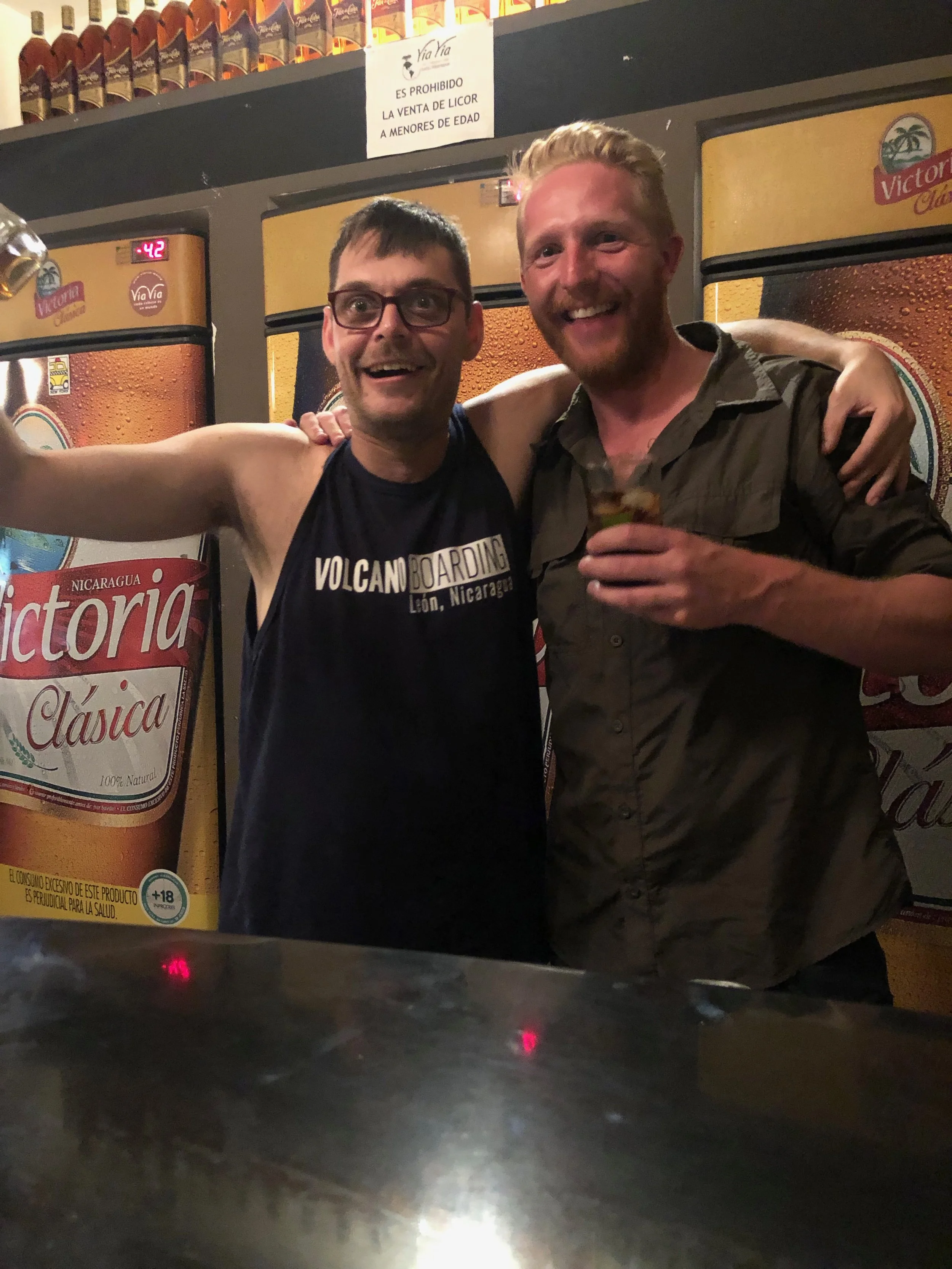
Lieven and I
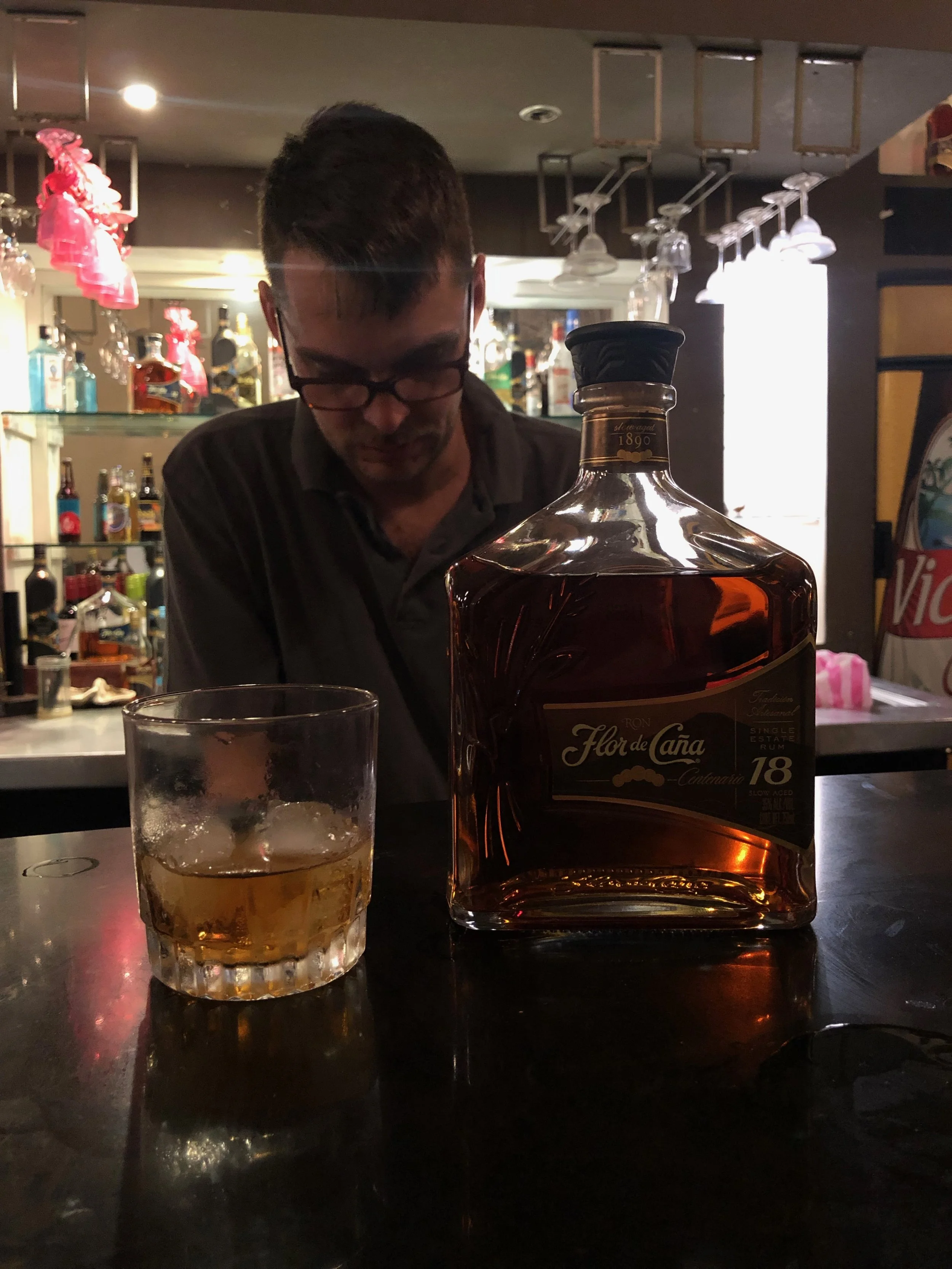
Nicaragua does one thing really well - rum. Flor de Cana has to be one of the best (and best value) rums in the world
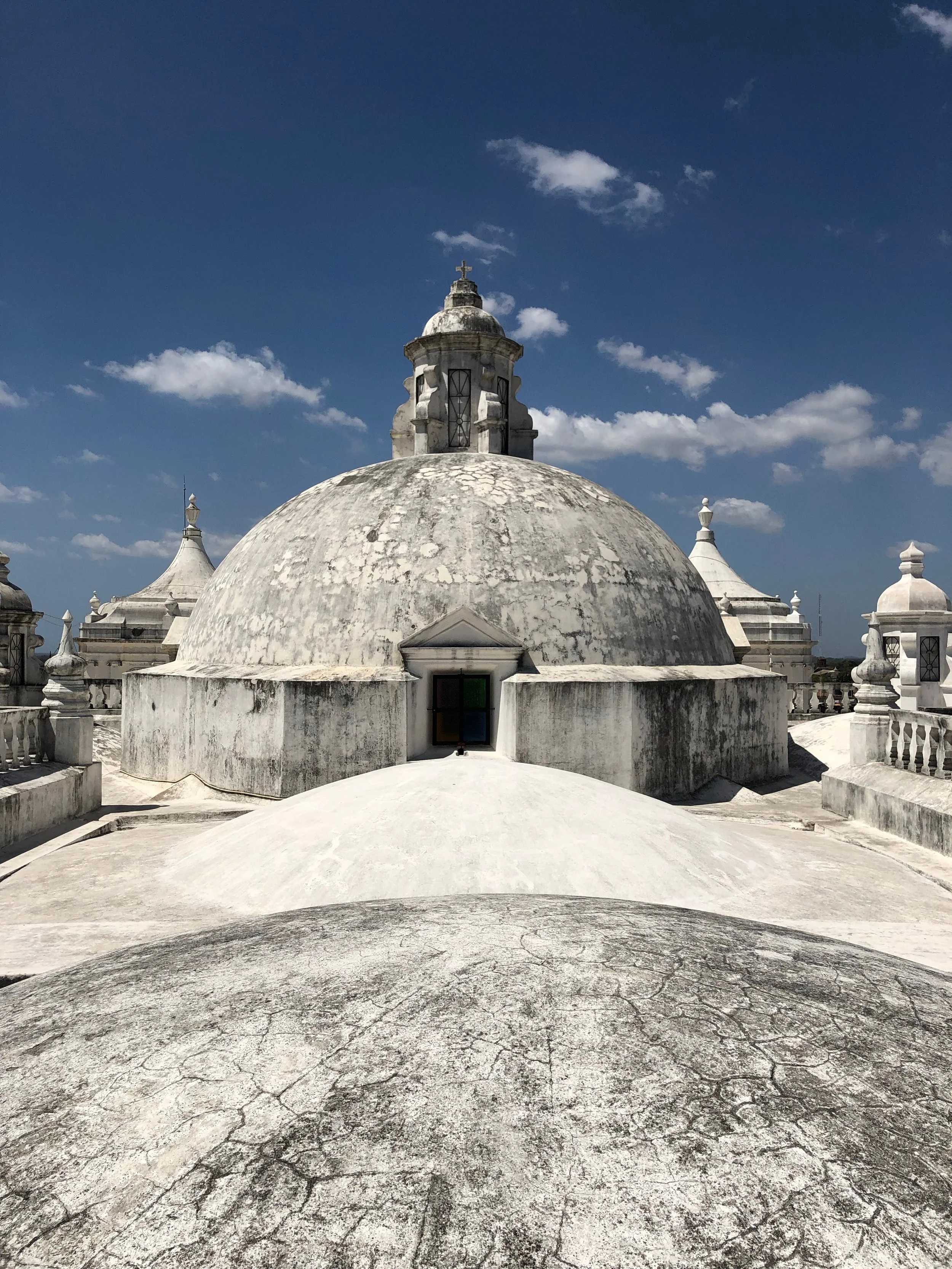
Leon’s main church
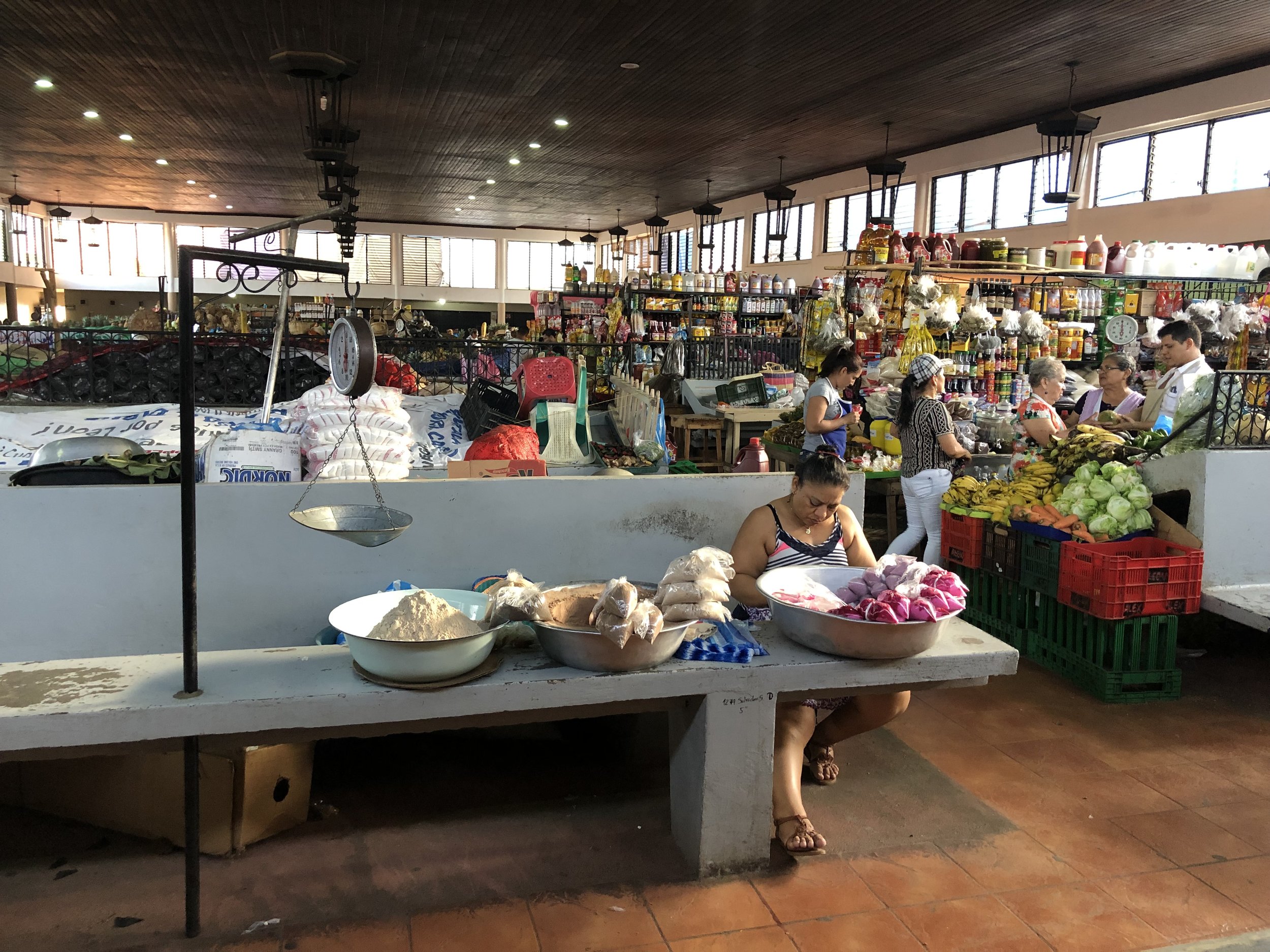
Central market
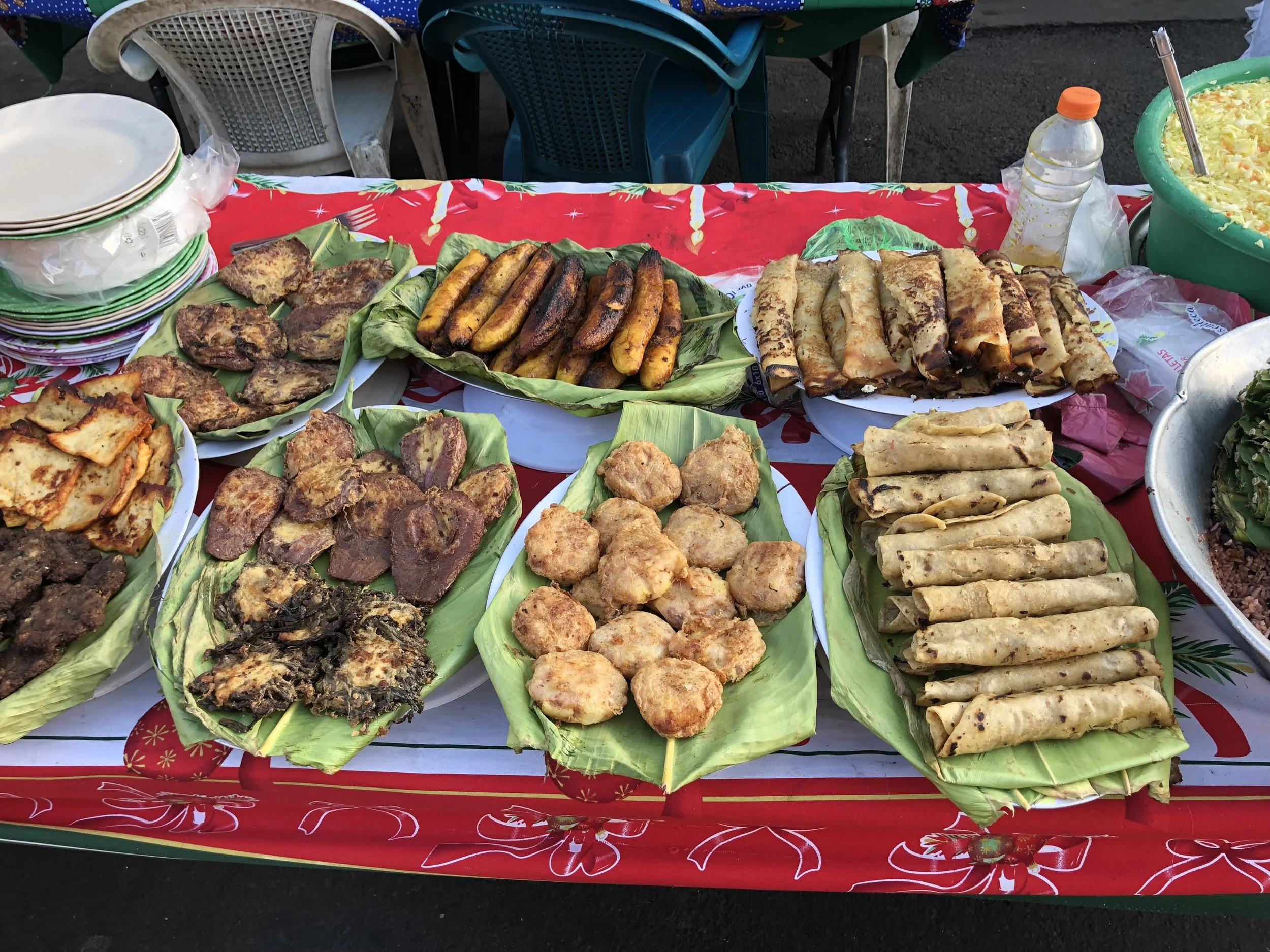
Street food
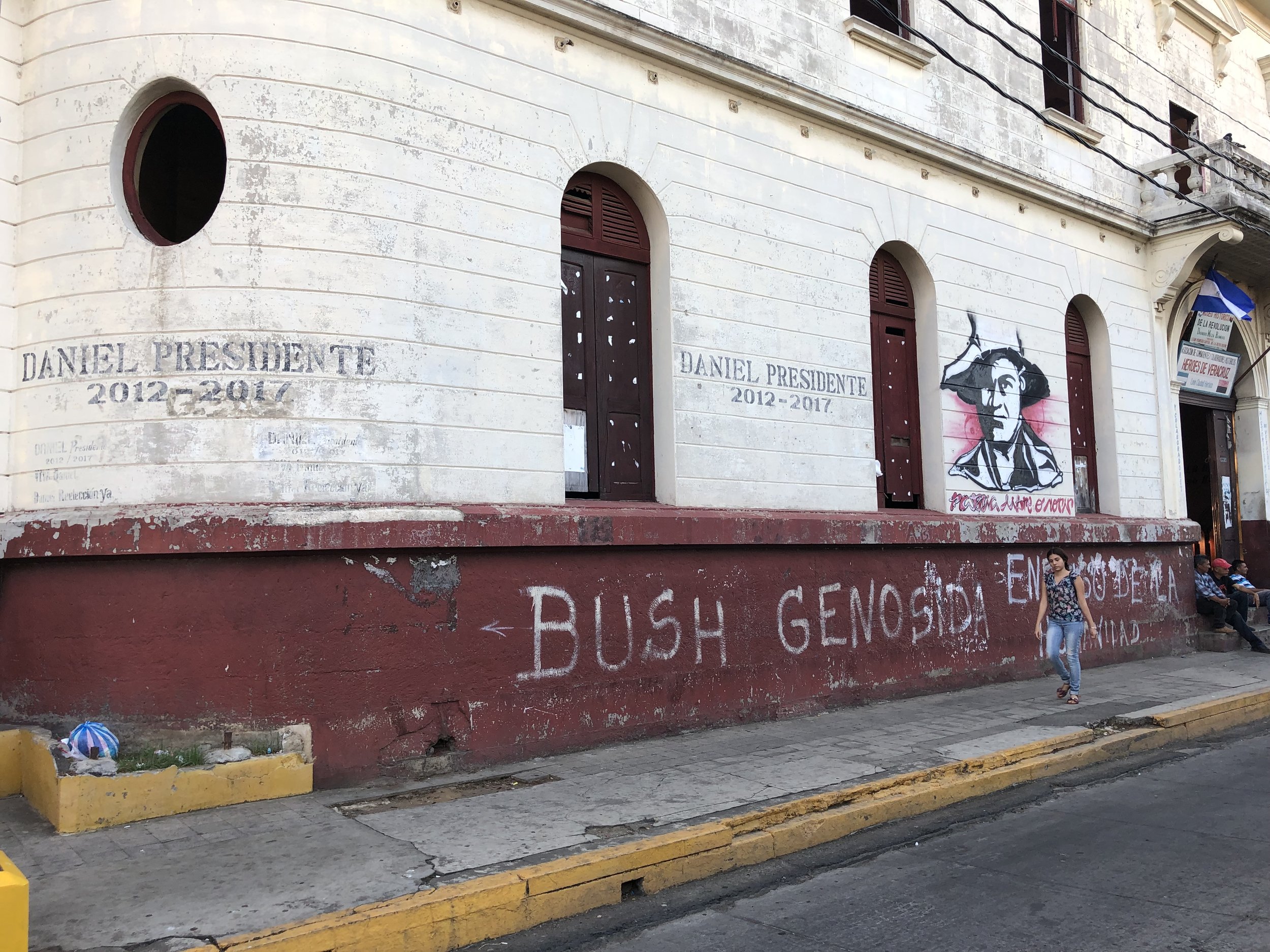
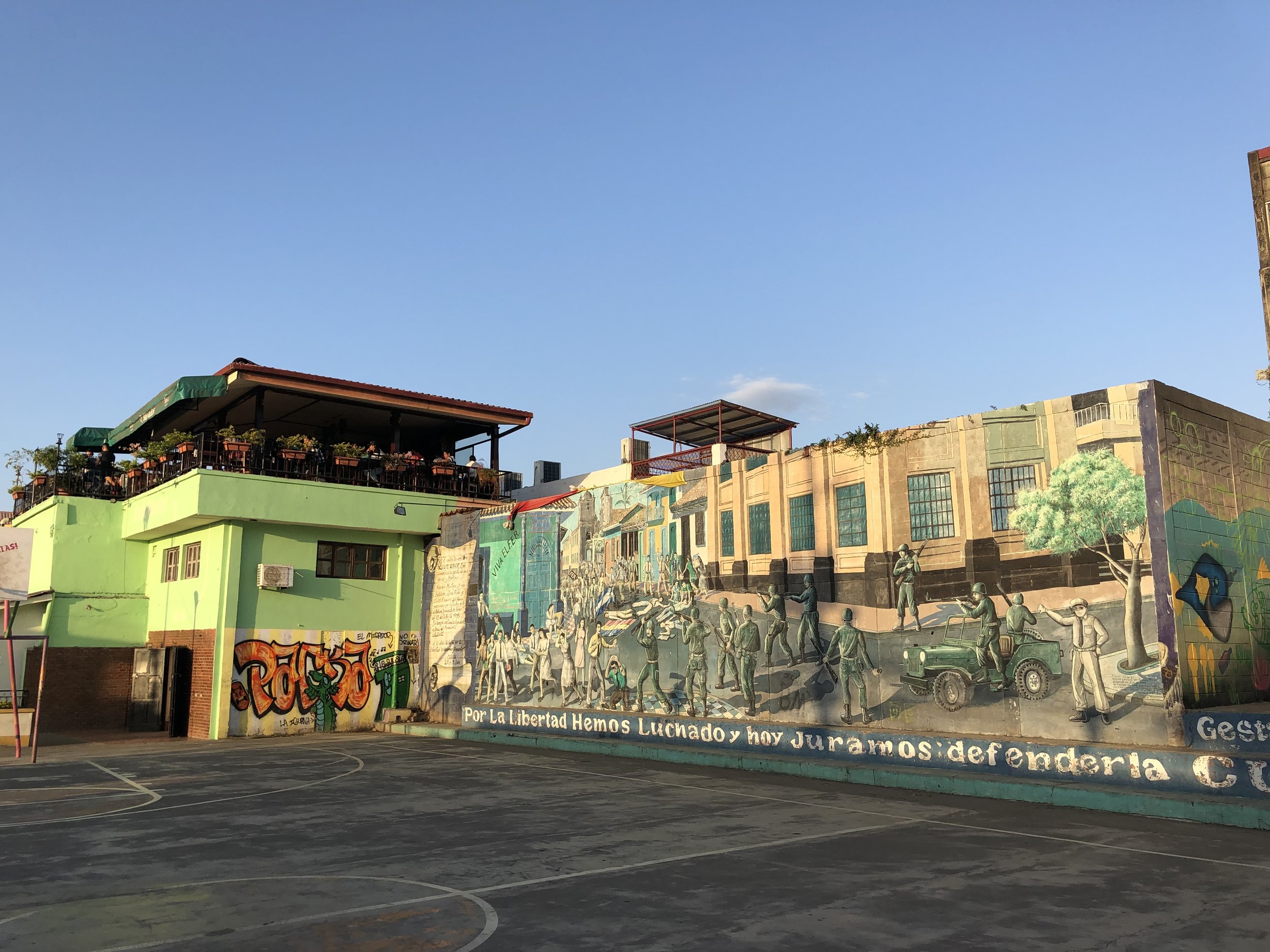
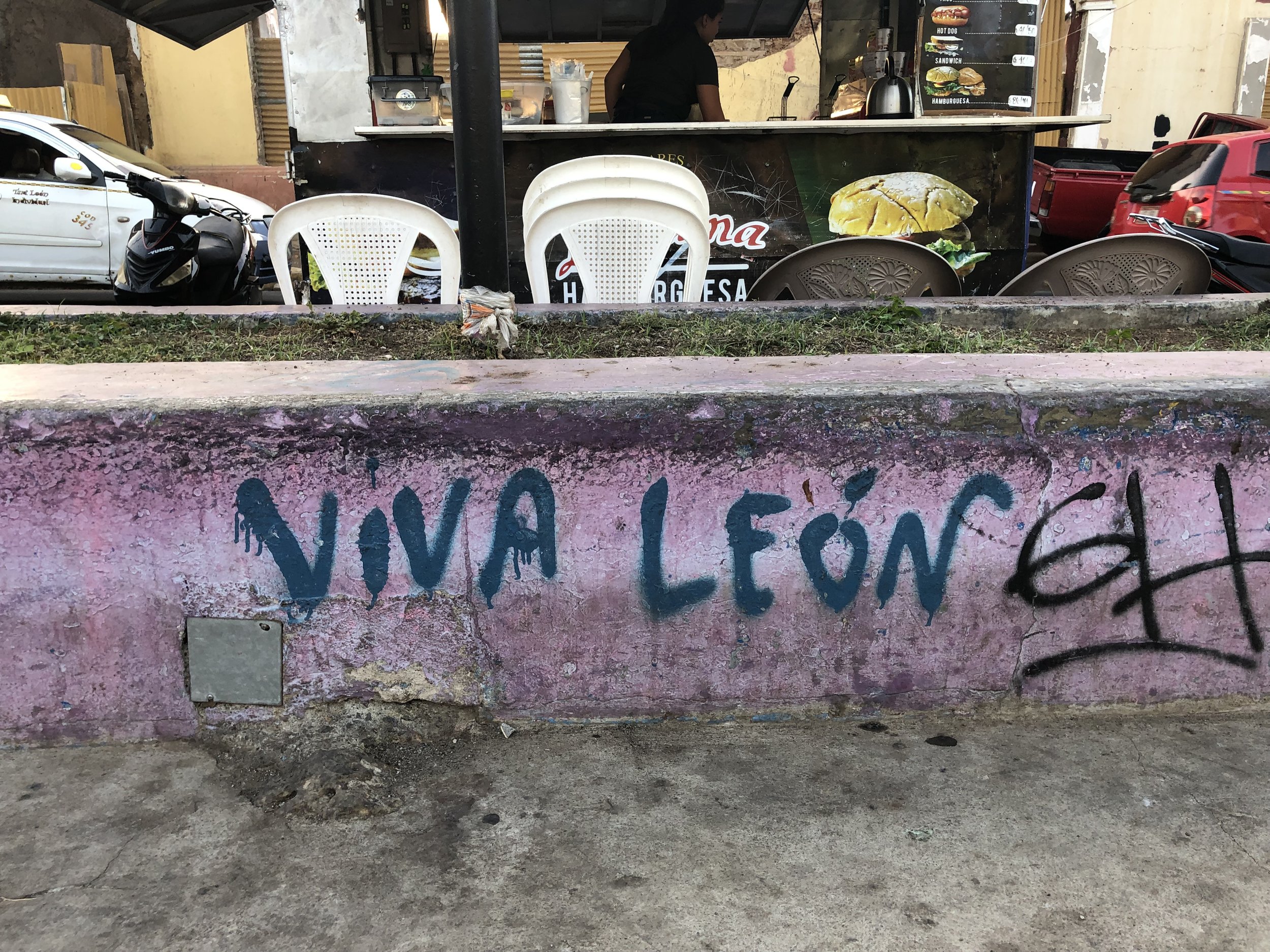
There’s a lot of politically-oriented graffiti around the city
A trip to a Nicaraguan school:
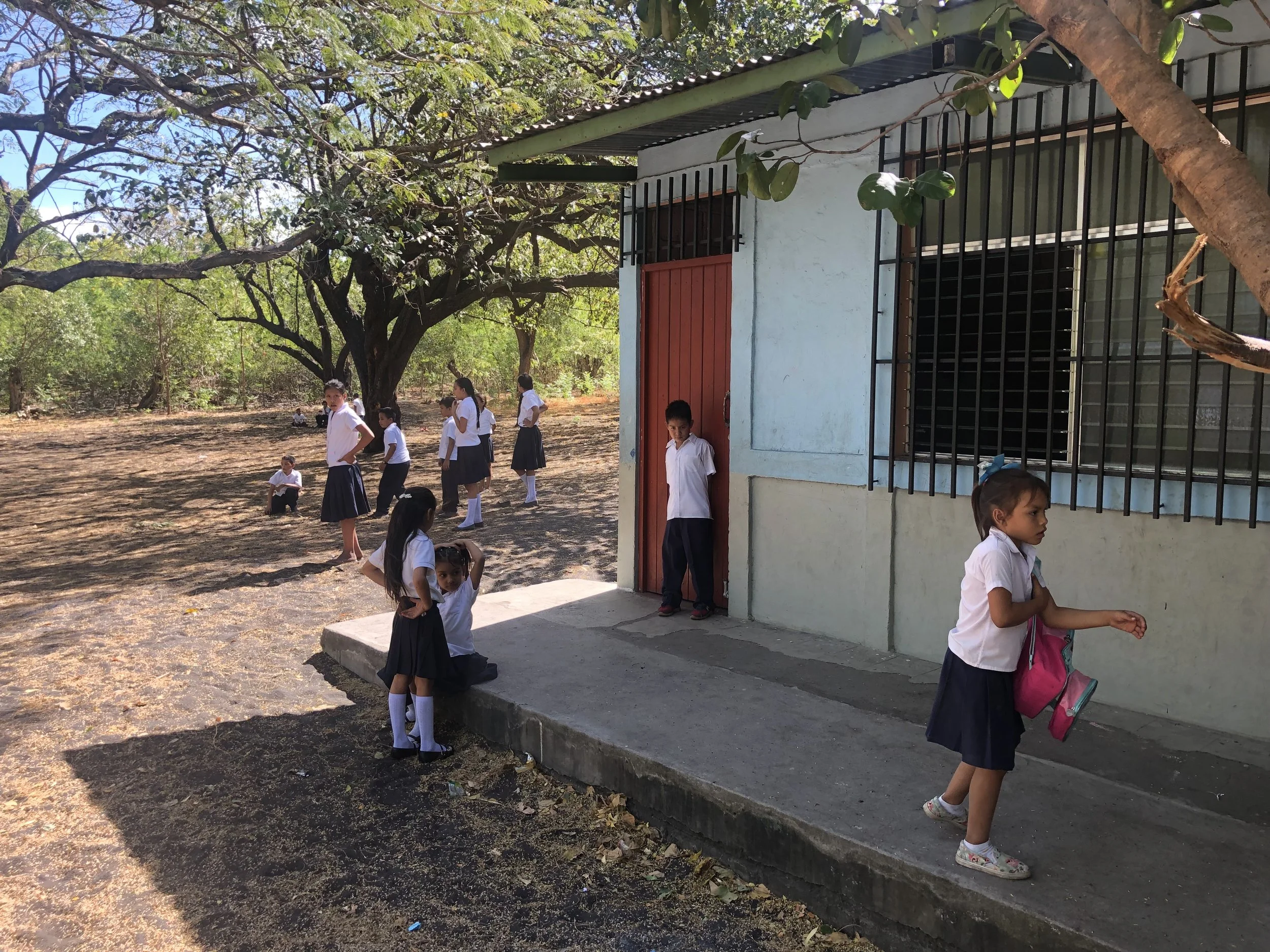
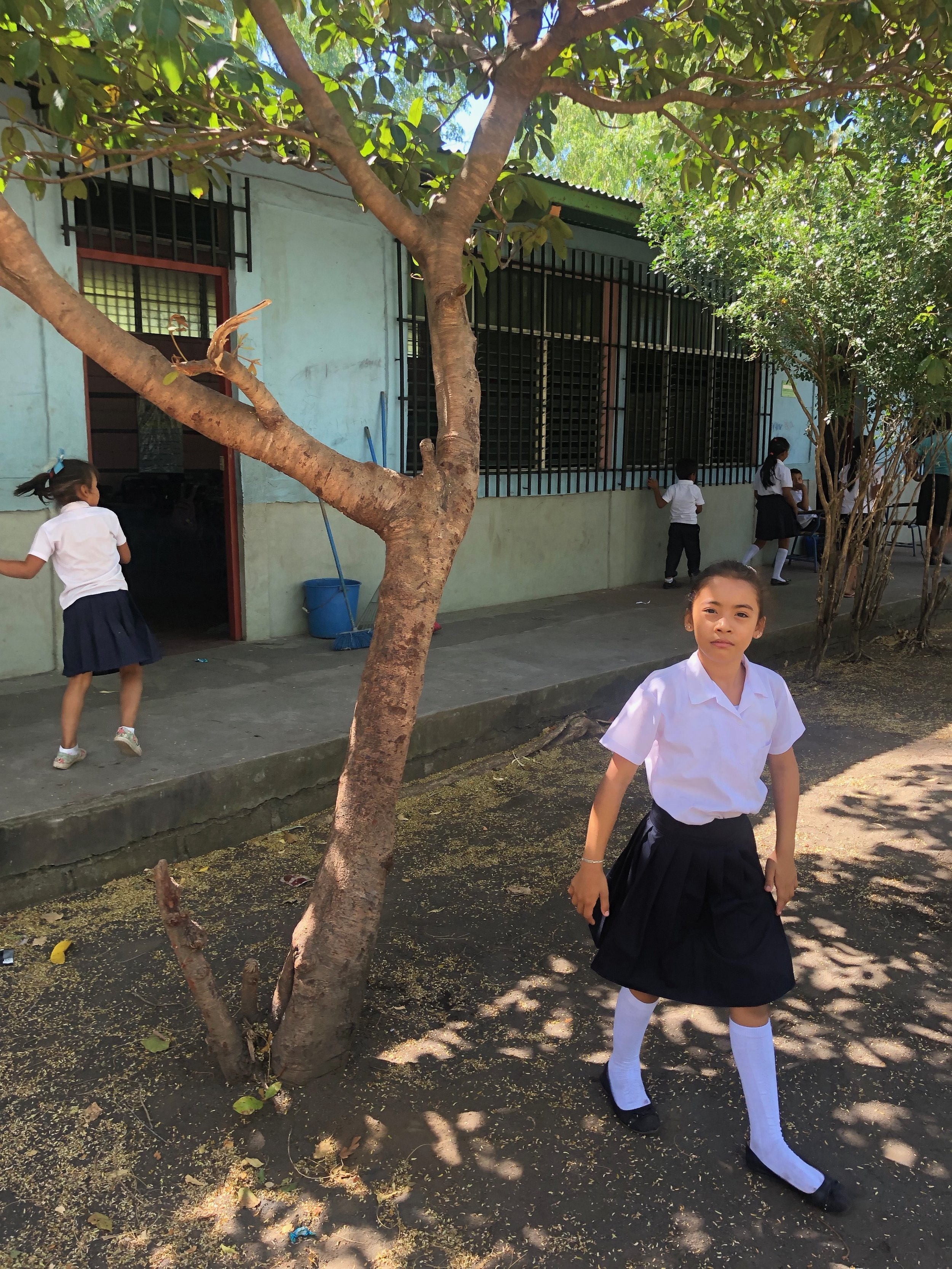
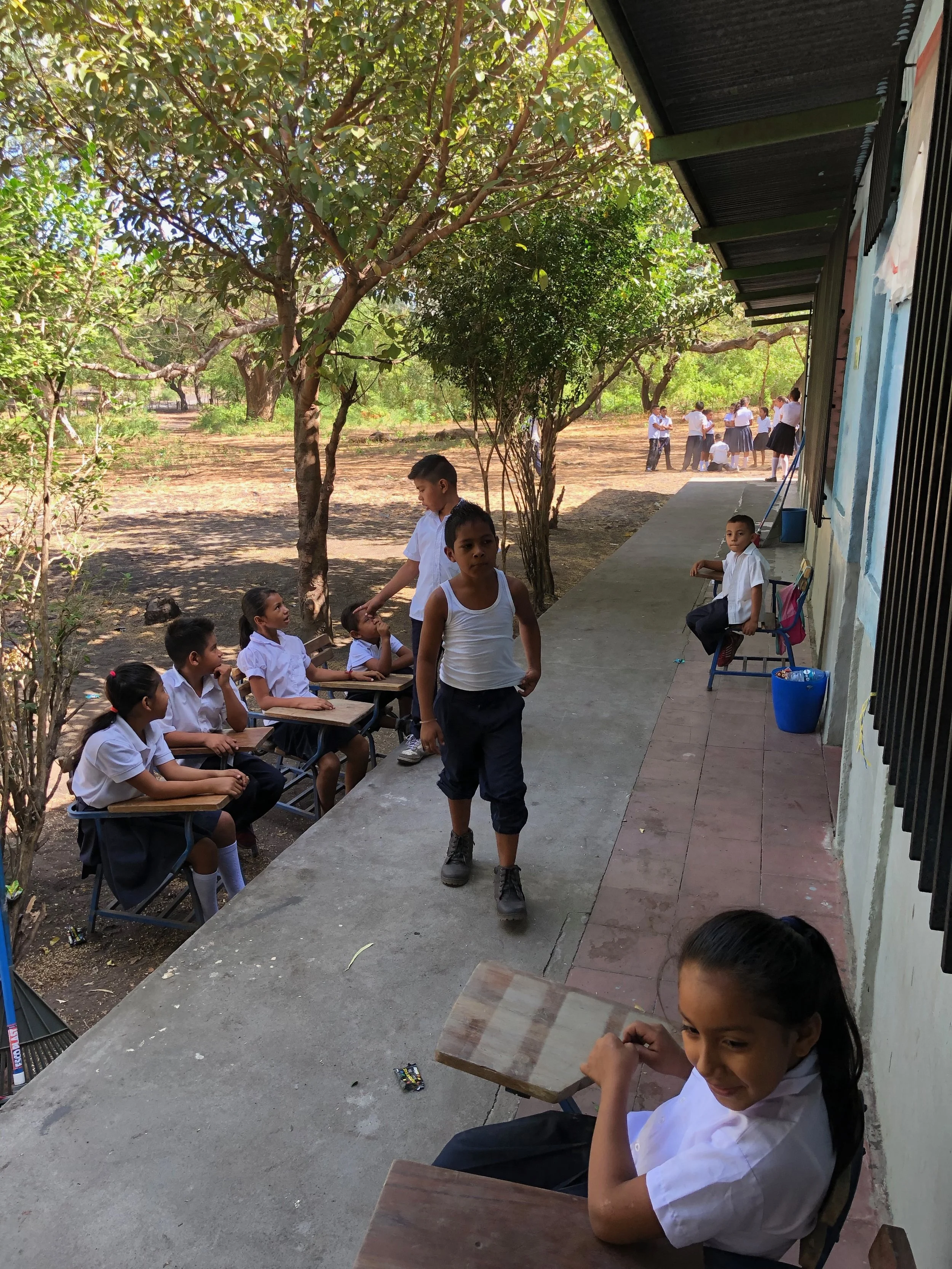
During my first evening in Leon, the hostel held a trivia night with the proceeds going towards providing toilet paper to a local school that was severely underfunded. Feeling curious and trying to avoid cliché tourist activities like volcano boarding (which Leon is known for), I opted to tag along with Lieven and the crew associated with the program. We drove an hour to a small school off a dirt road and arrived to find a school consisting of 81 kids, three teachers and two classrooms, with the age range appearing to be from around 5 – 12 years of age.
The teachers there gave us a tour and showed us the toilets of the school. They consisted of two long drop toilets, no running water, no toilet paper, no sink to wash their hands and no hand sanitiser. The kids would use leaves to wipe themselves. Government funding for this school didn’t cover these basic hygiene needs so the responsibility to solve it falls to the community. It was nice to see the local business community getting behind initiatives like this.
Seeing this school in person was eye opening. Because of my experience at the border and with the police, I had entered the country angry at the Nicaraguan people. My blood boiled at the thought of the people sitting around at the Nicaraguan-Honduran border, waiting to take advantage of foreigners like me passing through. But having seen the opportunities available to those in rural Nicaragua, illustrated by the school I visited, I walked away with a very different perspective. It’s no surprise that people without opportunity and with limited education would find themselves looking to feed themselves and their families however they could. I sincerely hope that the government changes and the country can, over time, make progress in the way they provide basic health and education to their children.
Ometepe:
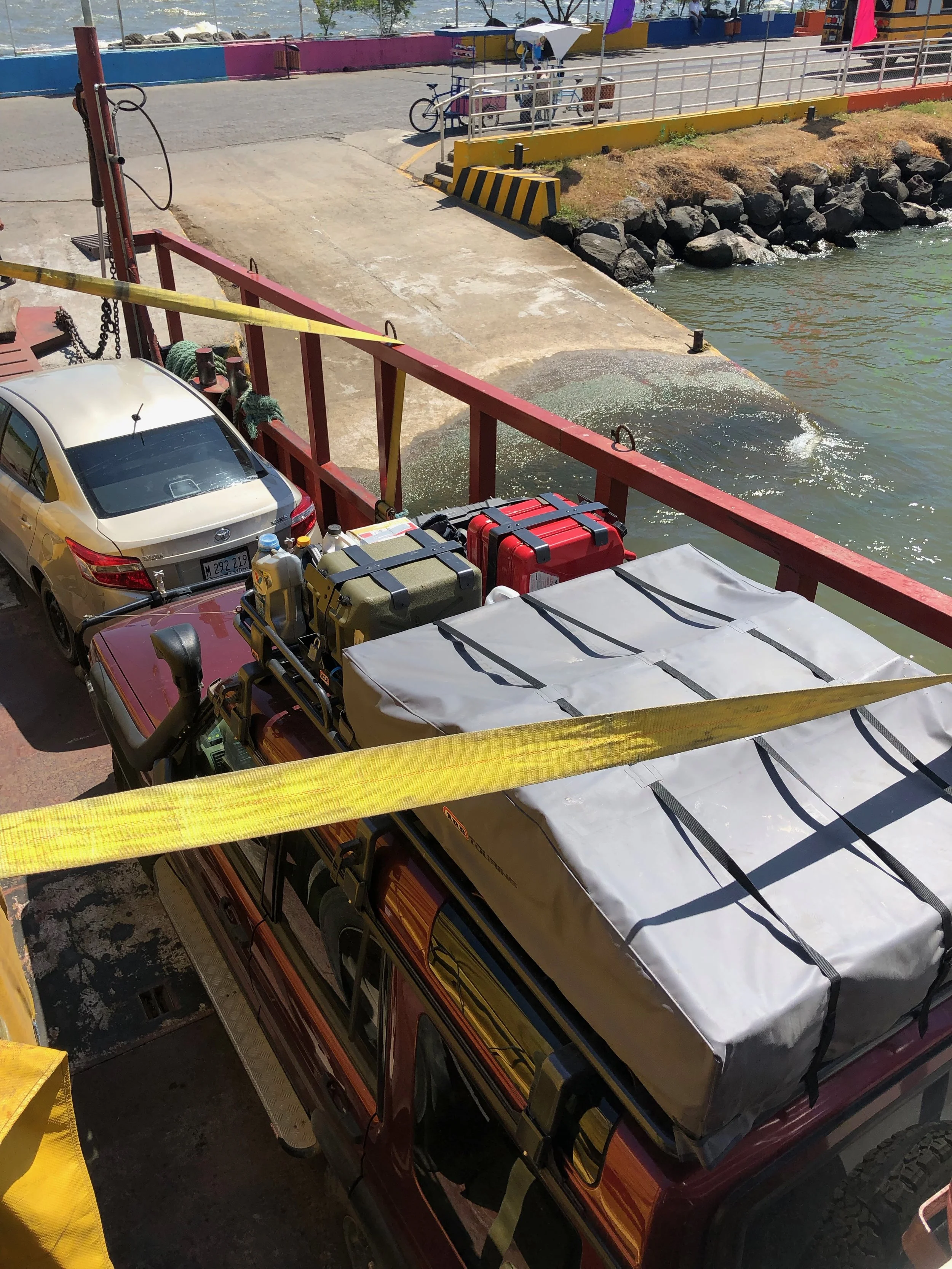
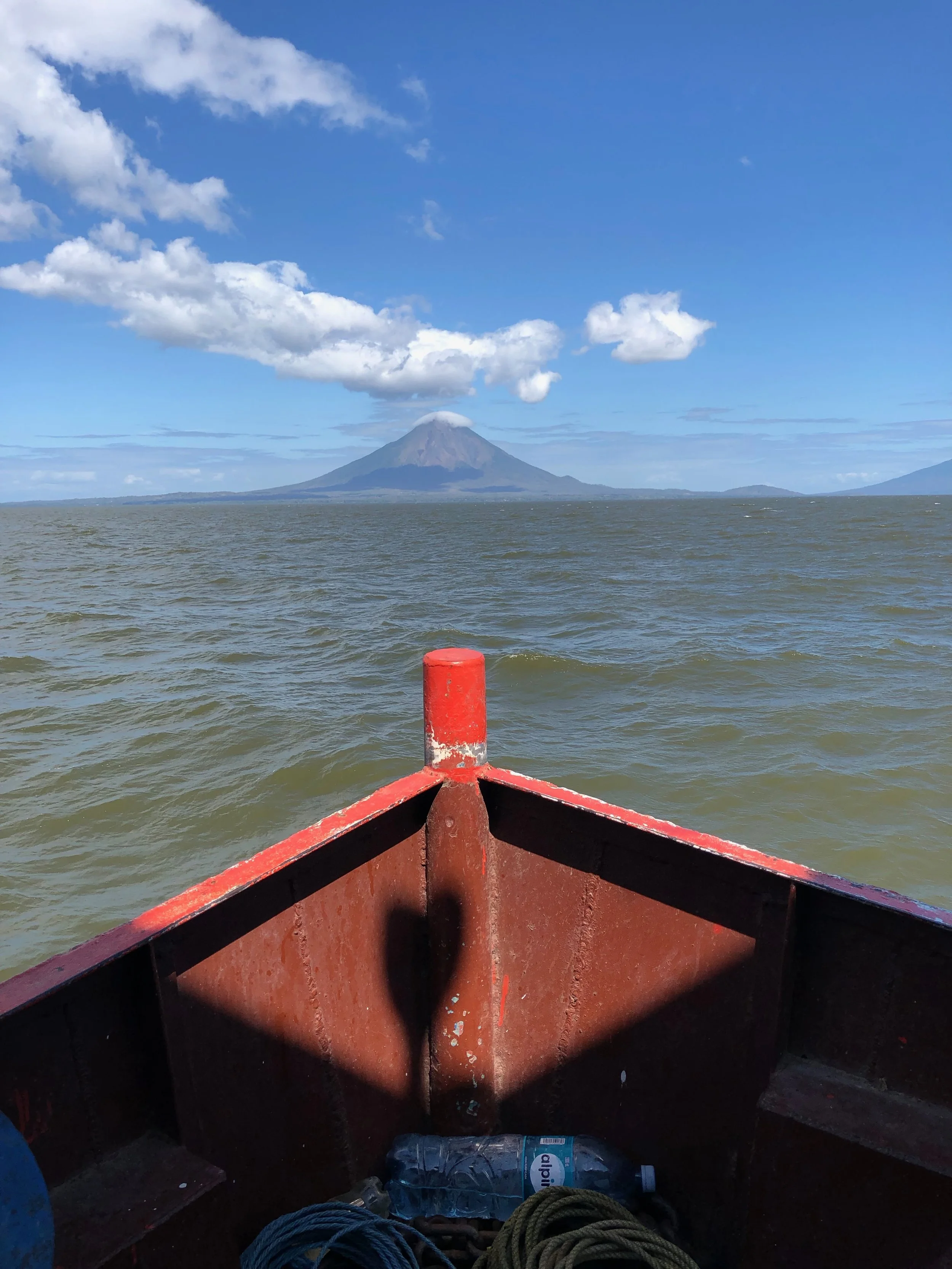
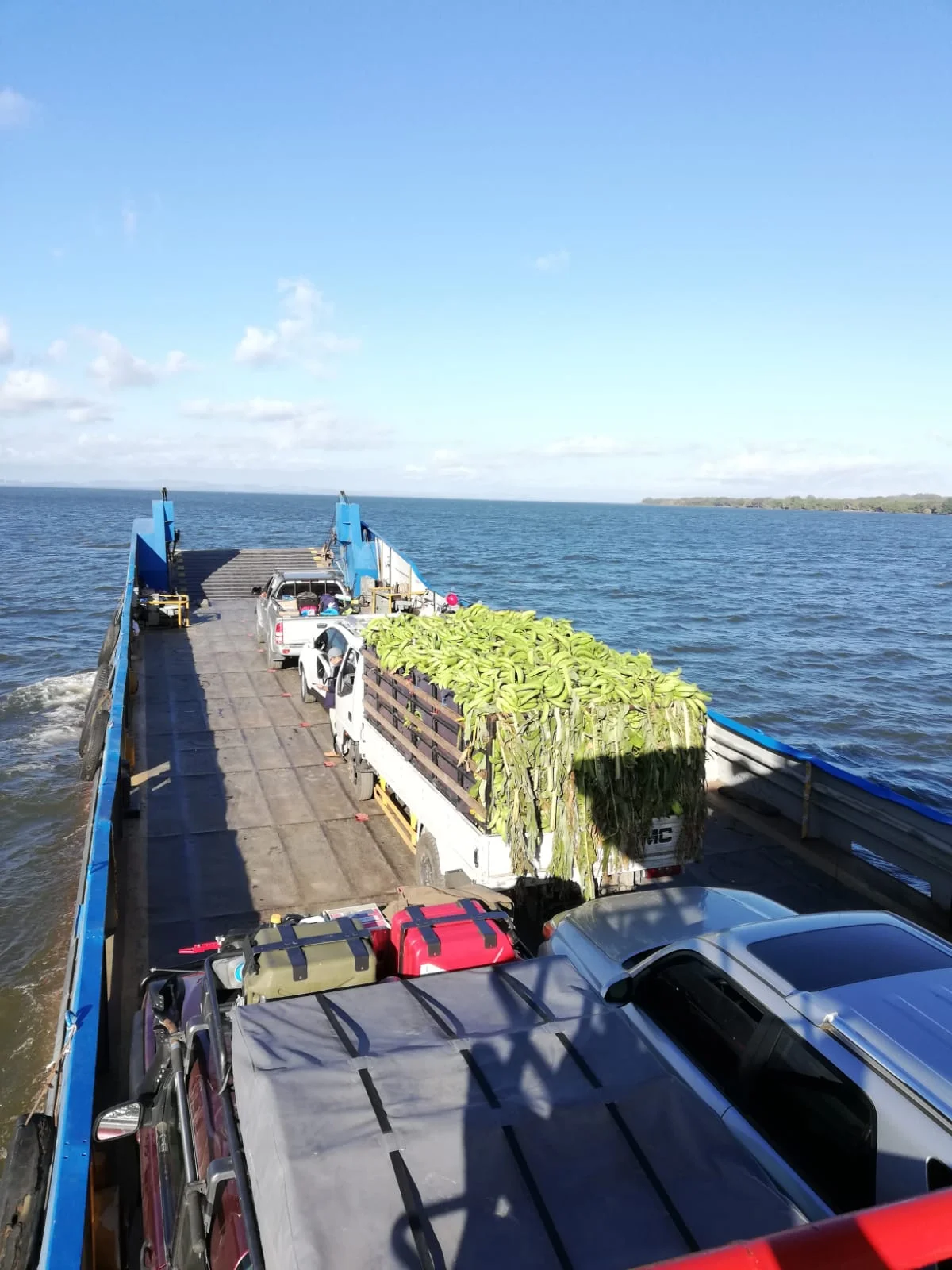
After Leon, Dajana and I set off south for Ometepe, an island formed by two volcanoes in Lake Nicaragua (the largest lake in the country). It was an uneventful five hour drive to the ferry and I drove patiently and as diligently as possible to avoid more police entanglements. We loaded the car onto the ferry and relaxed as we slowly made our way towards the two volcanoes jutting out of the lake.
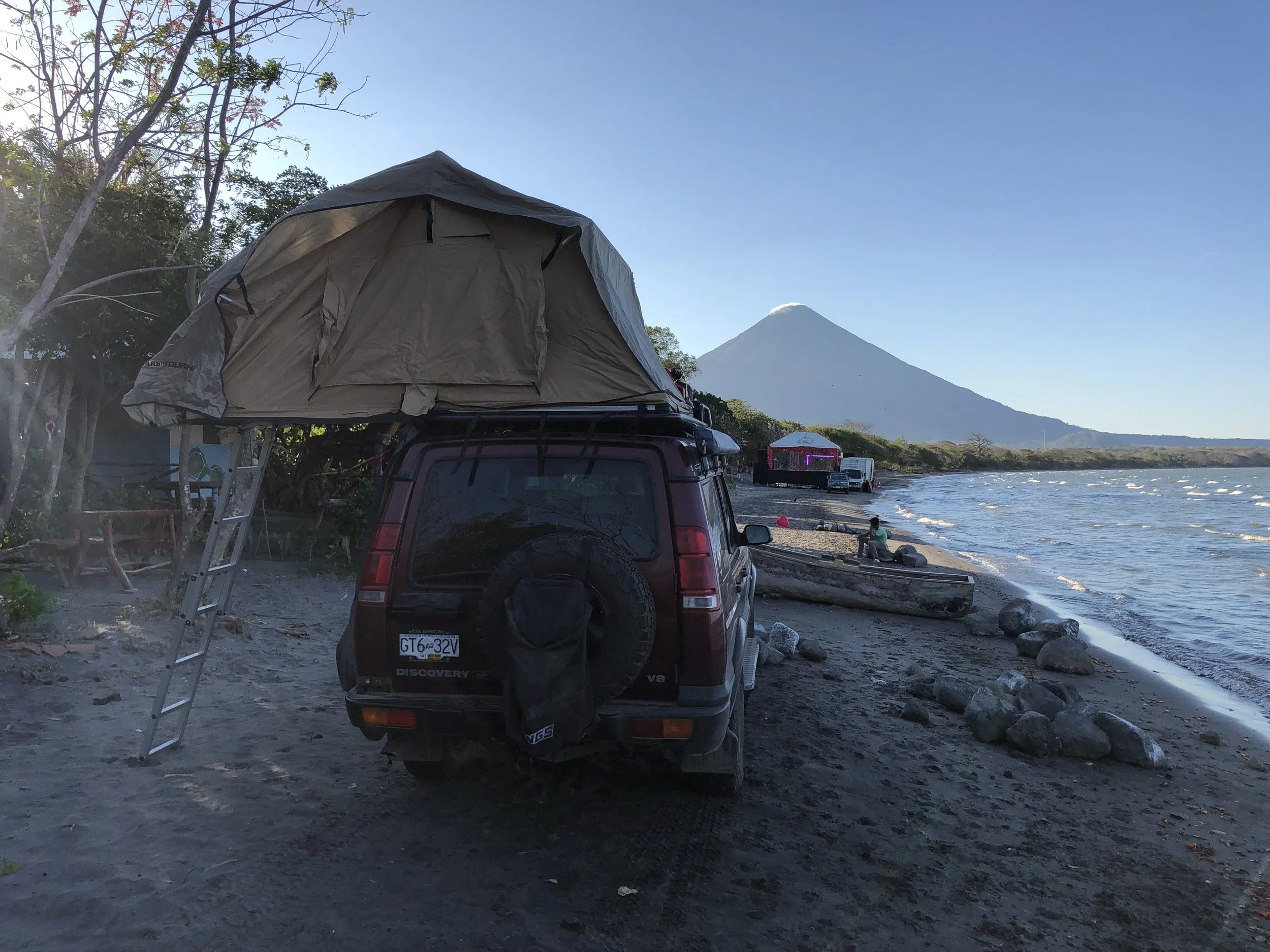
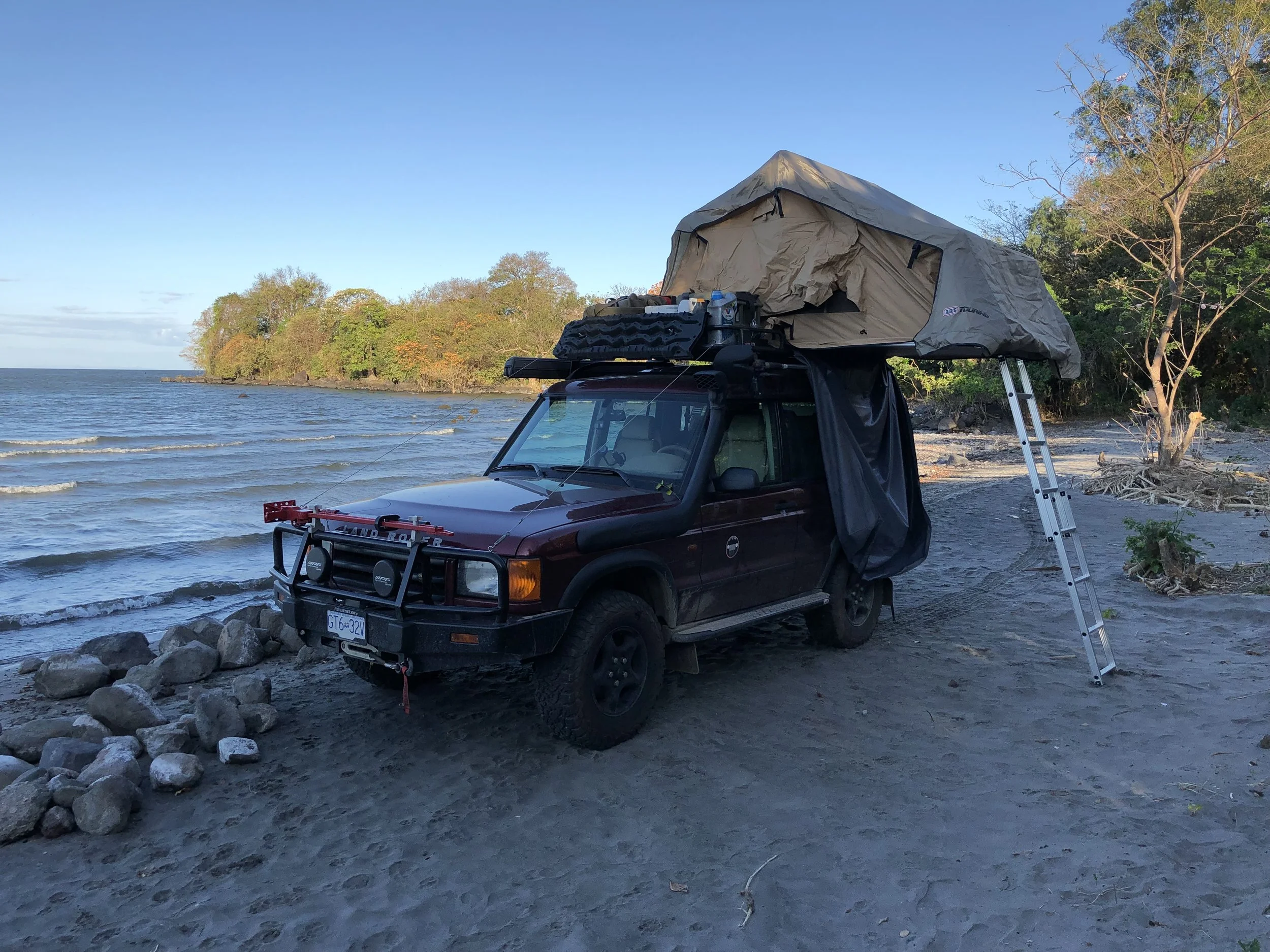
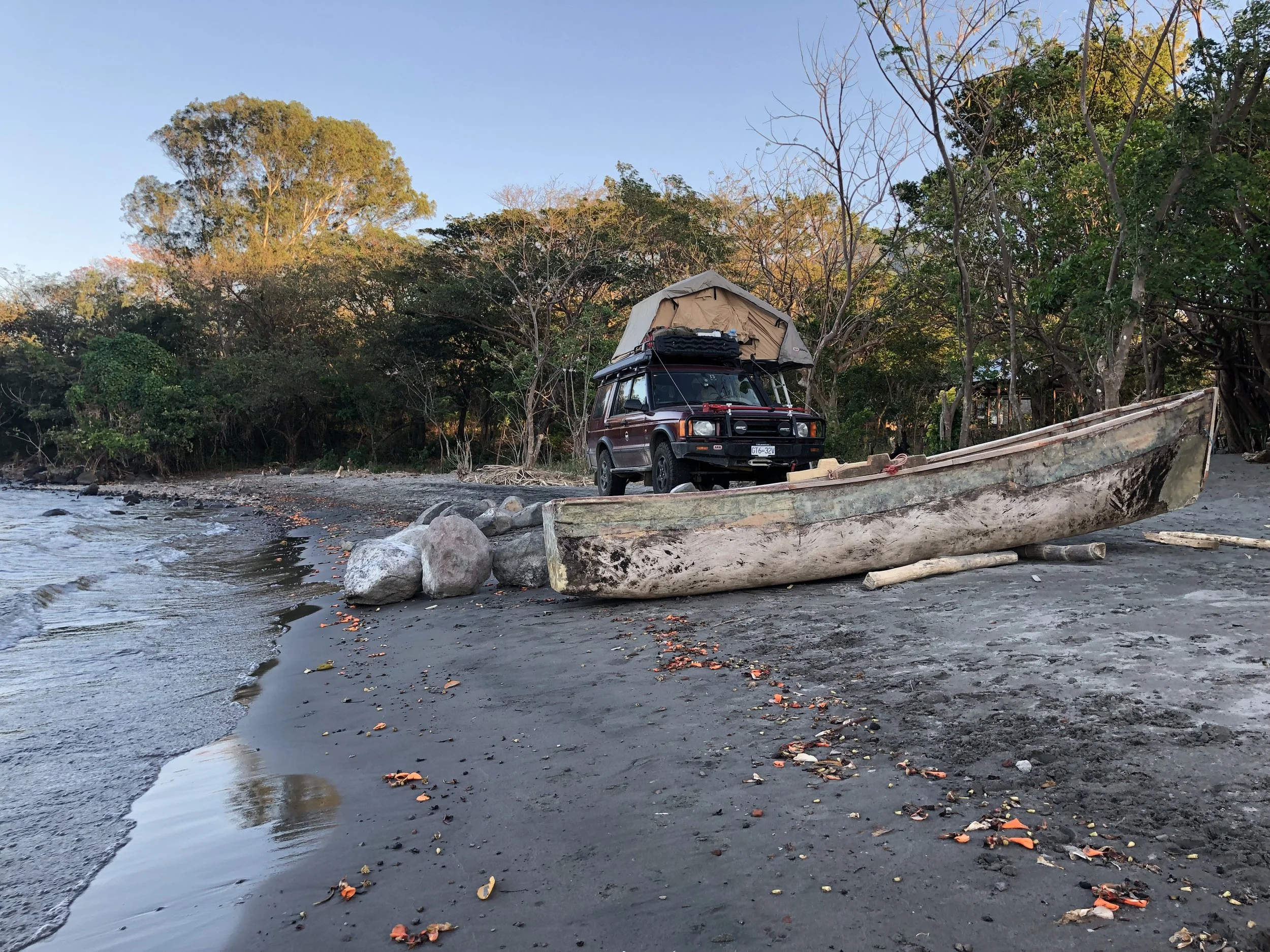
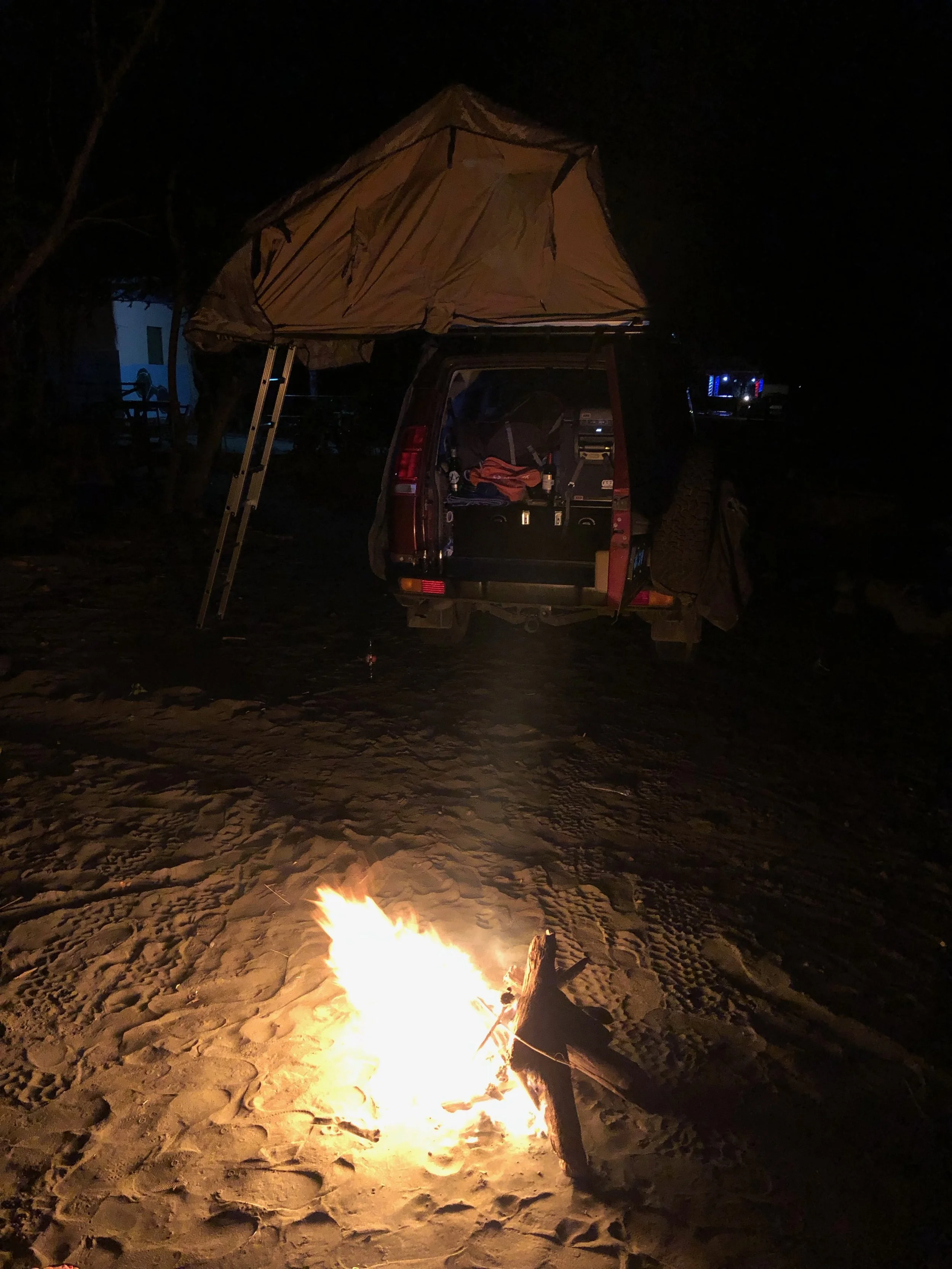
We made some friends on the ferry across – two Dutch and an English guy – and once on the island, gave them a lift to their hostel. For Dajana and I, we were both keen to get away from the hostels and backpackers and found a quiet restaurant on the beach and asked them if we could set up the car and rooftop tent on the beach in front of them. They provided us with firewood, a shower, decent local food and ice and cokes to mix with our rum. We had a beautiful sunset over the lake and the fireflies and bats kept us company in the evening as we enjoyed the tranquility of a beach to ourselves and a fire to keep us warm.
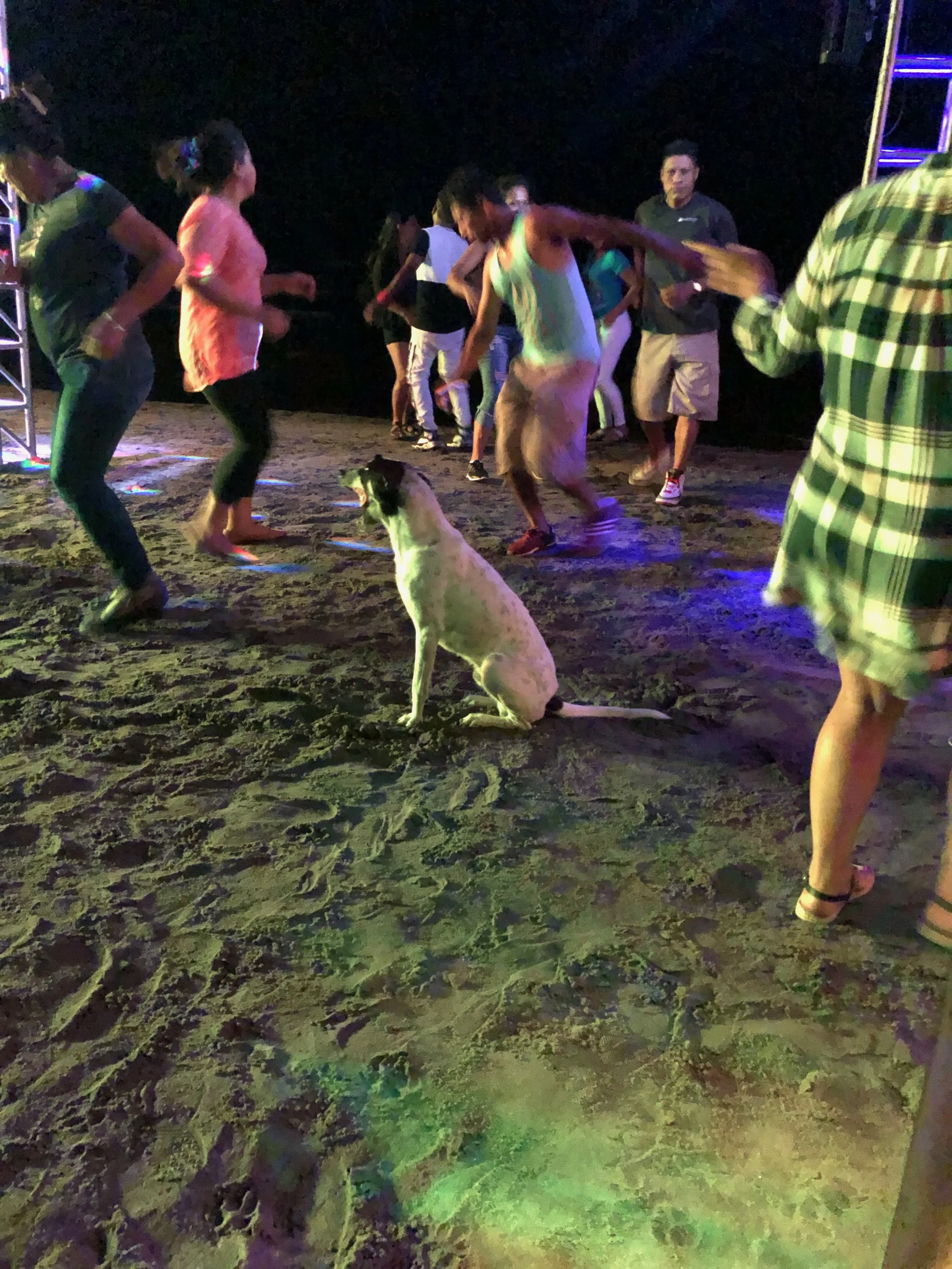
At Ometepe, we hiked to a waterfall, circumnavigated the island along rocky dirt roads, visited a (luke warm) hot springs, enjoyed an organic meal at Zipolote hostel (an extremely hippy hostel in the middle of nowhere) and enjoyed a Valentines Day fiesta on the beach a 5-minute walk from our campsite.
We wouldn’t have found our beach campsite without a very important tool called iOverlander which is an amazing resource for the overlander community. It’s basically map-based app where overlanders like me tag places to camp, eat, see attractions and sites off the regular tourist path – those that require a 4WD and a sense of adventure to find. Every overlander I’ve met on my travels swears by this app. My sincere appreciation to those who created and maintain it for the benefit of overlanders around the world!
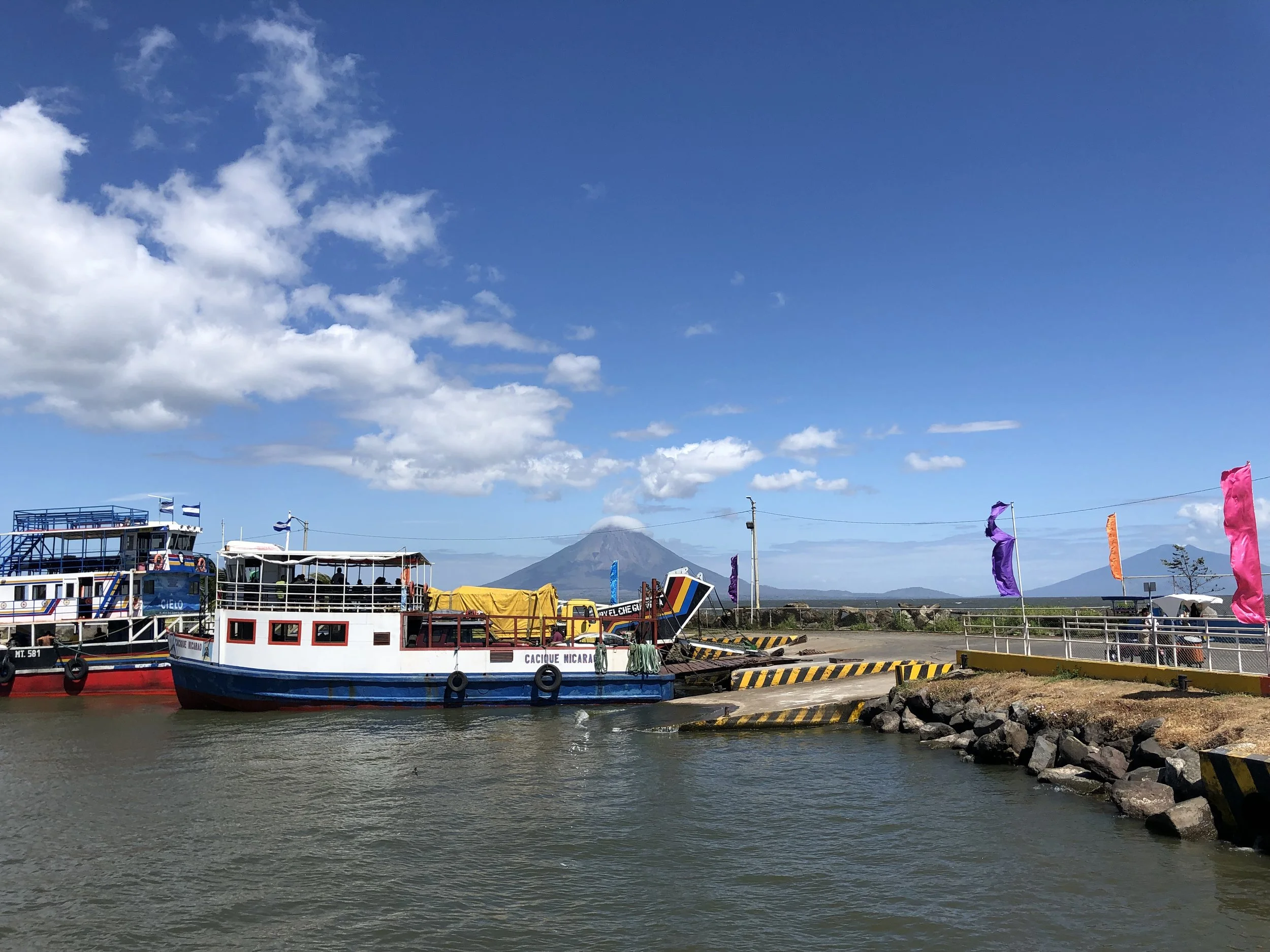
The car ferry to Ometepe
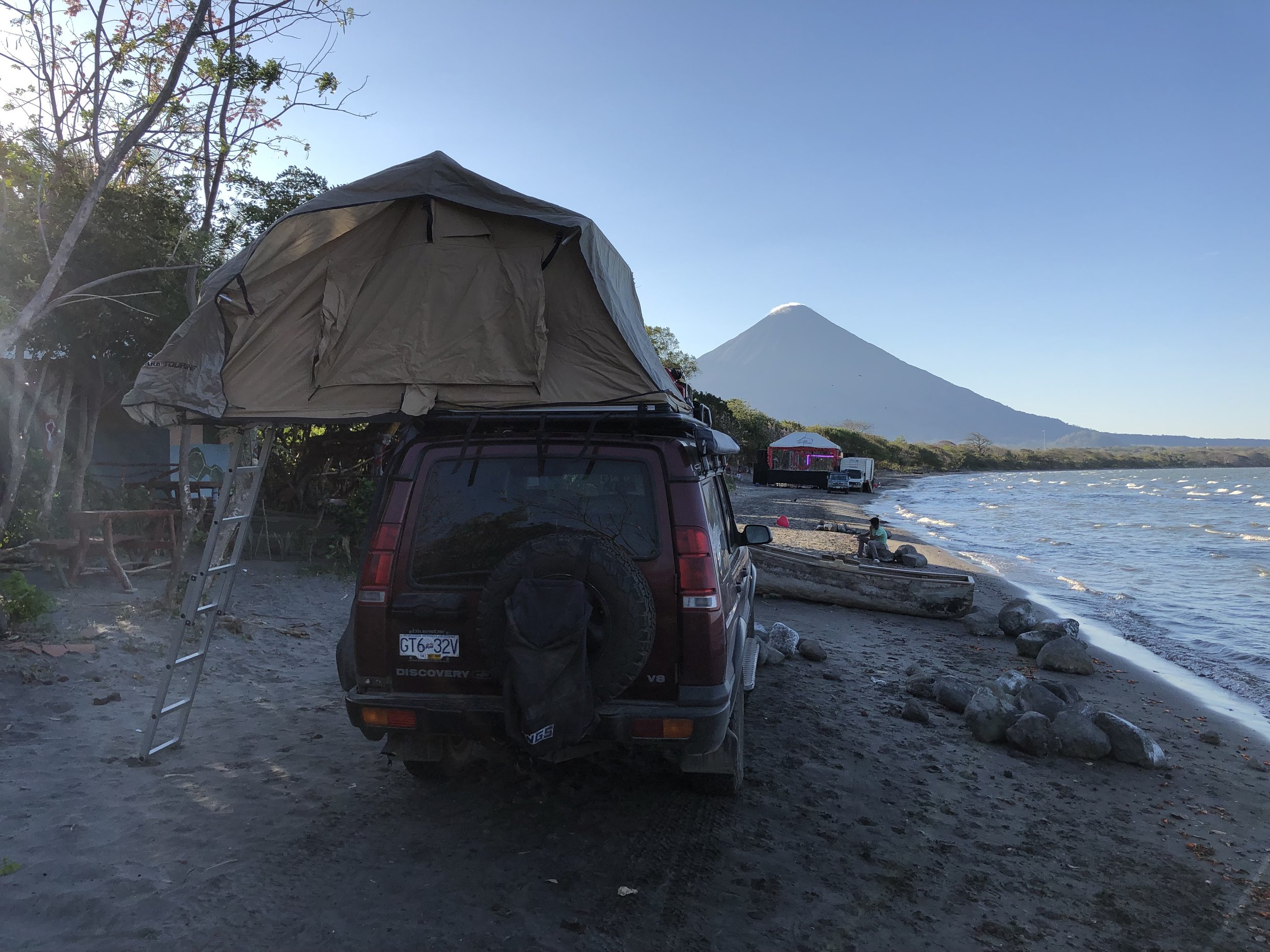
Our campsite for the few days we were on Ometepe
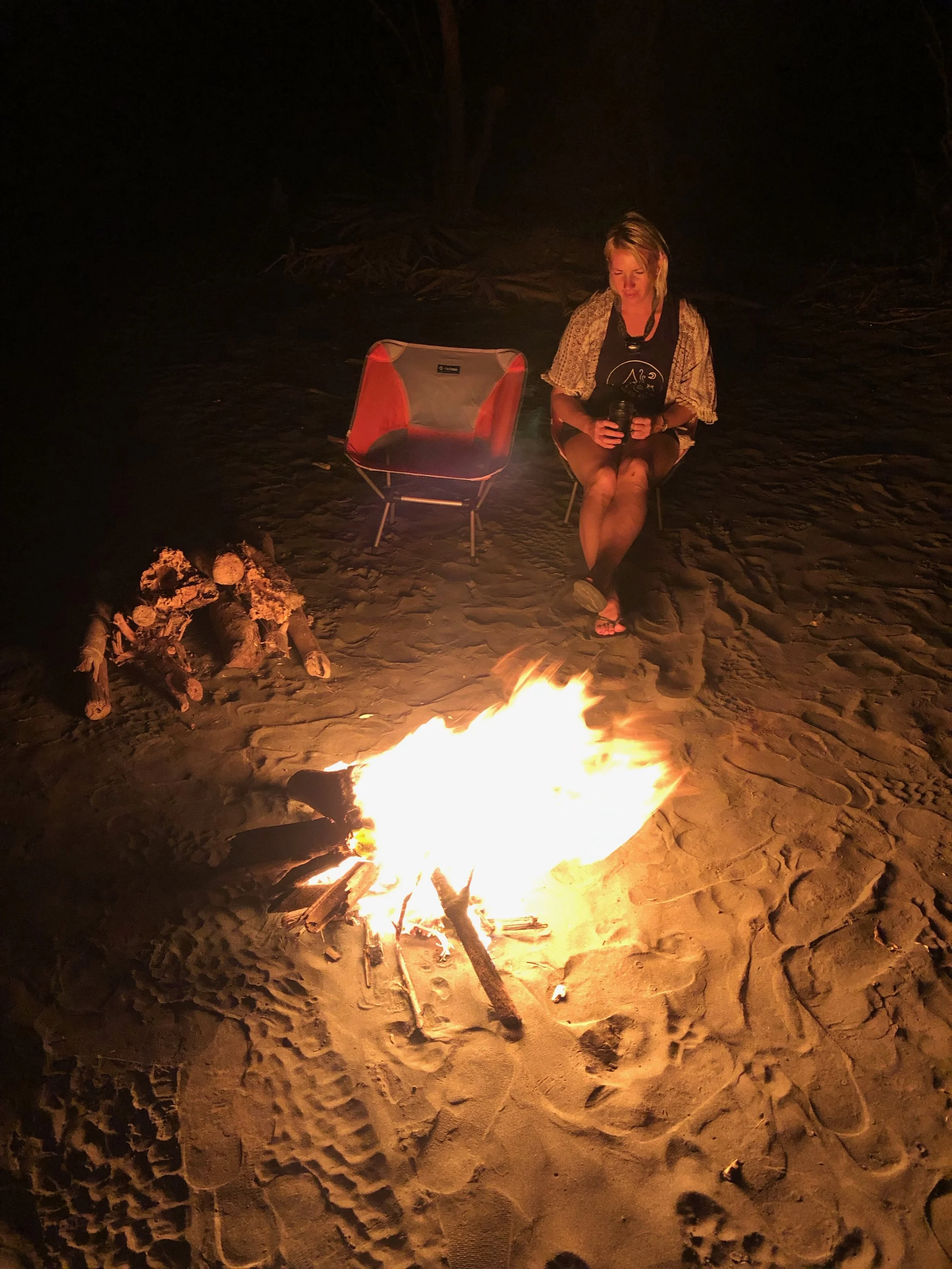
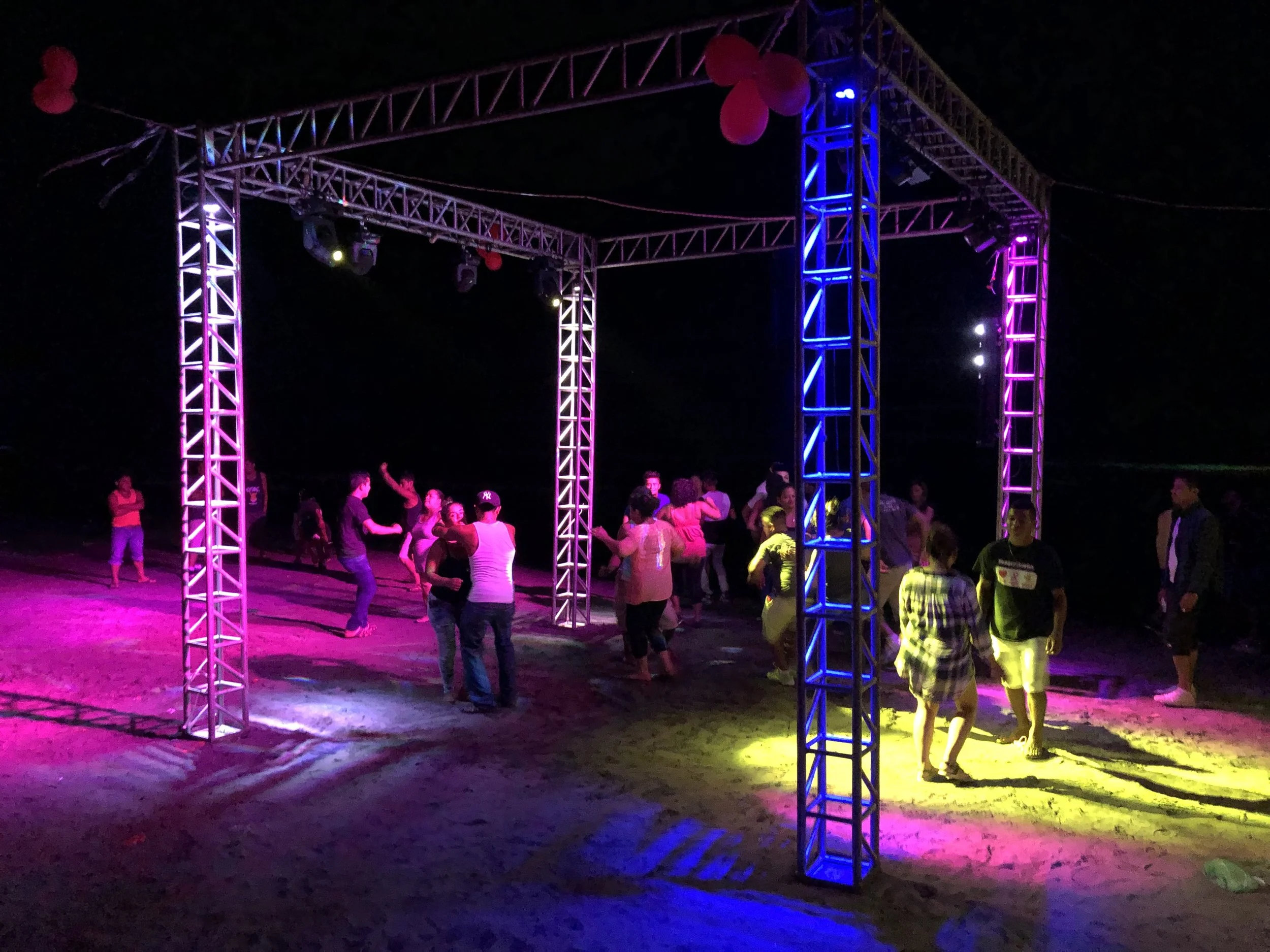
Valentines day party just down the beach from us
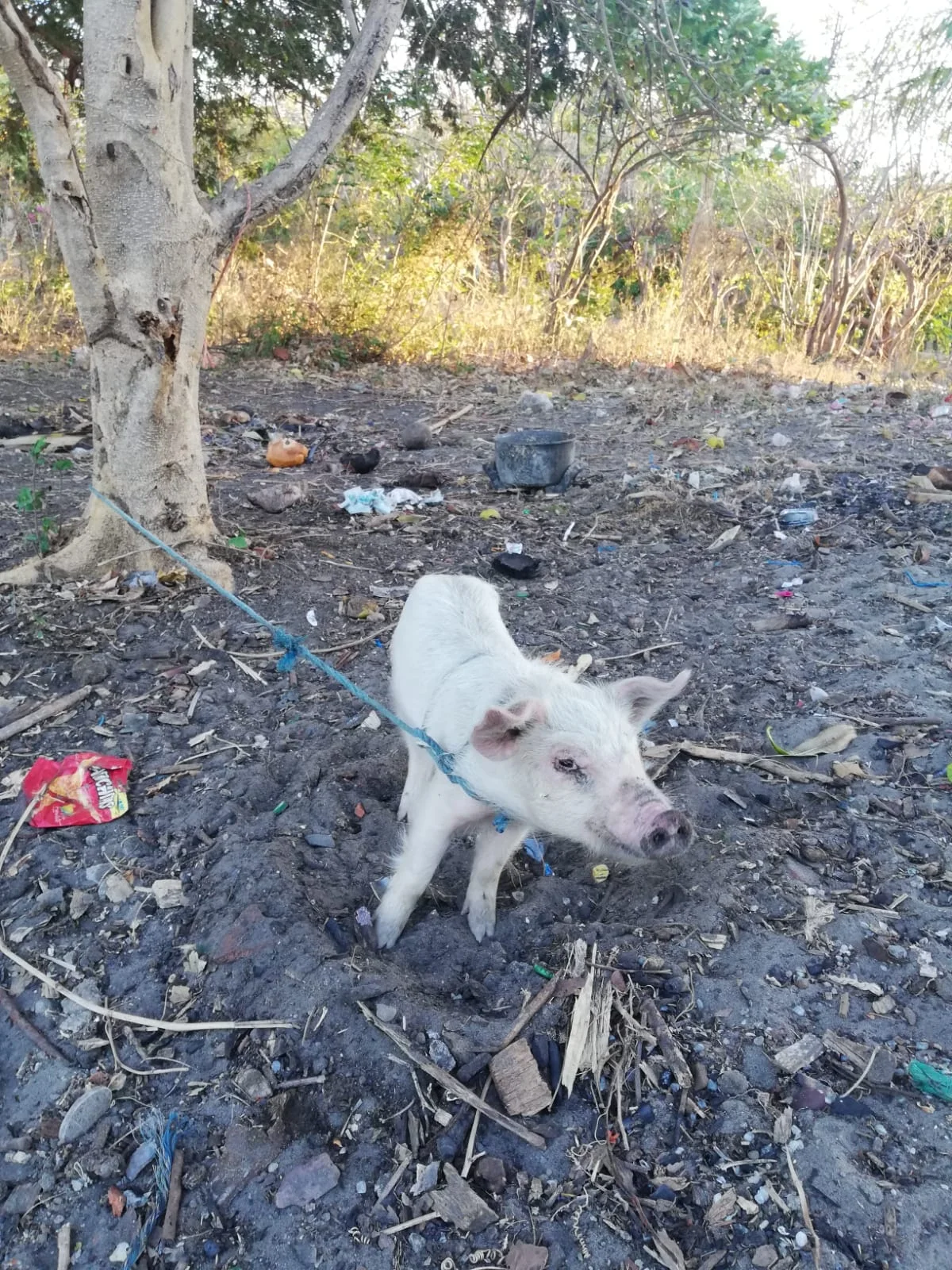
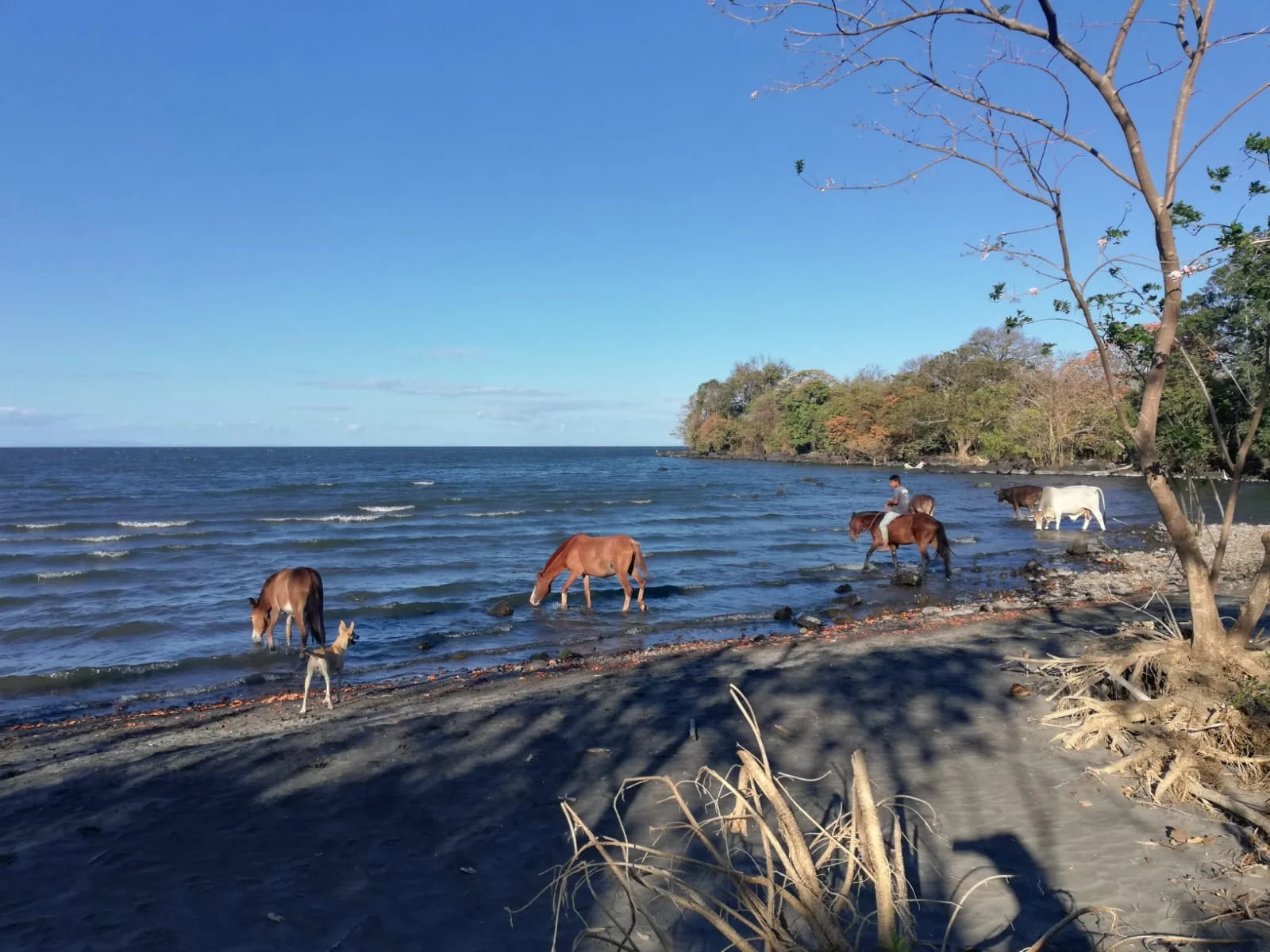
Headed back to the mainland
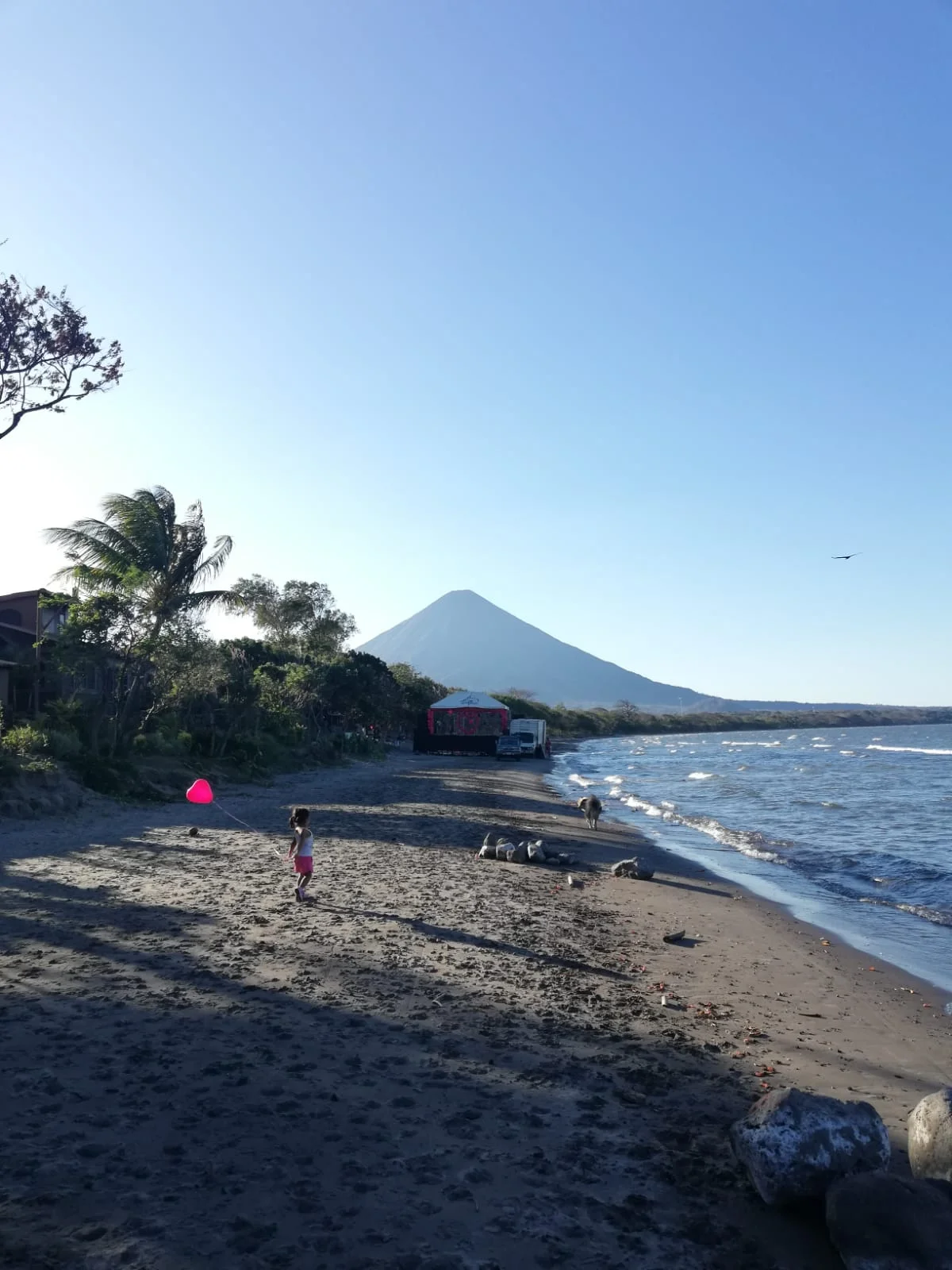
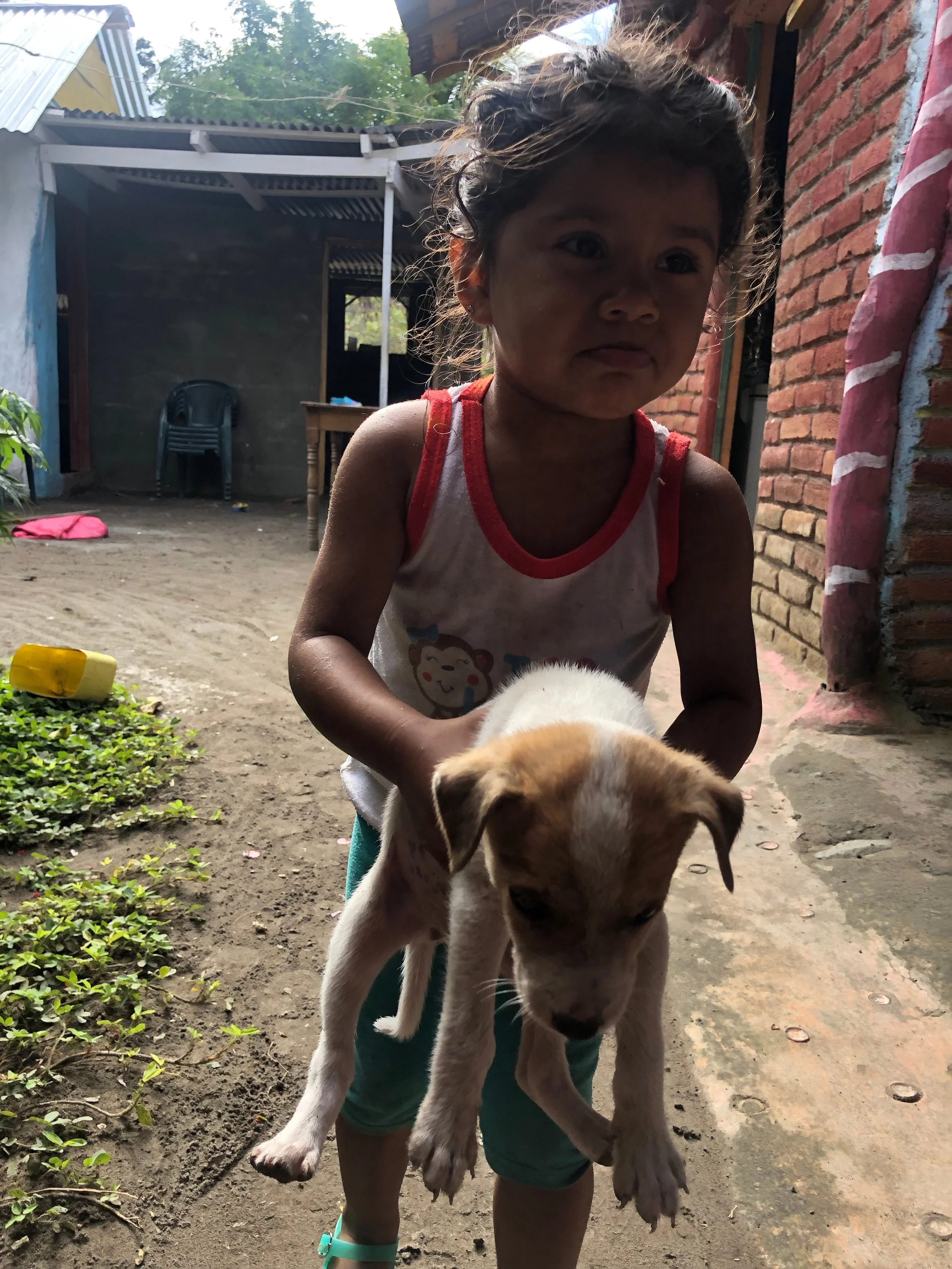
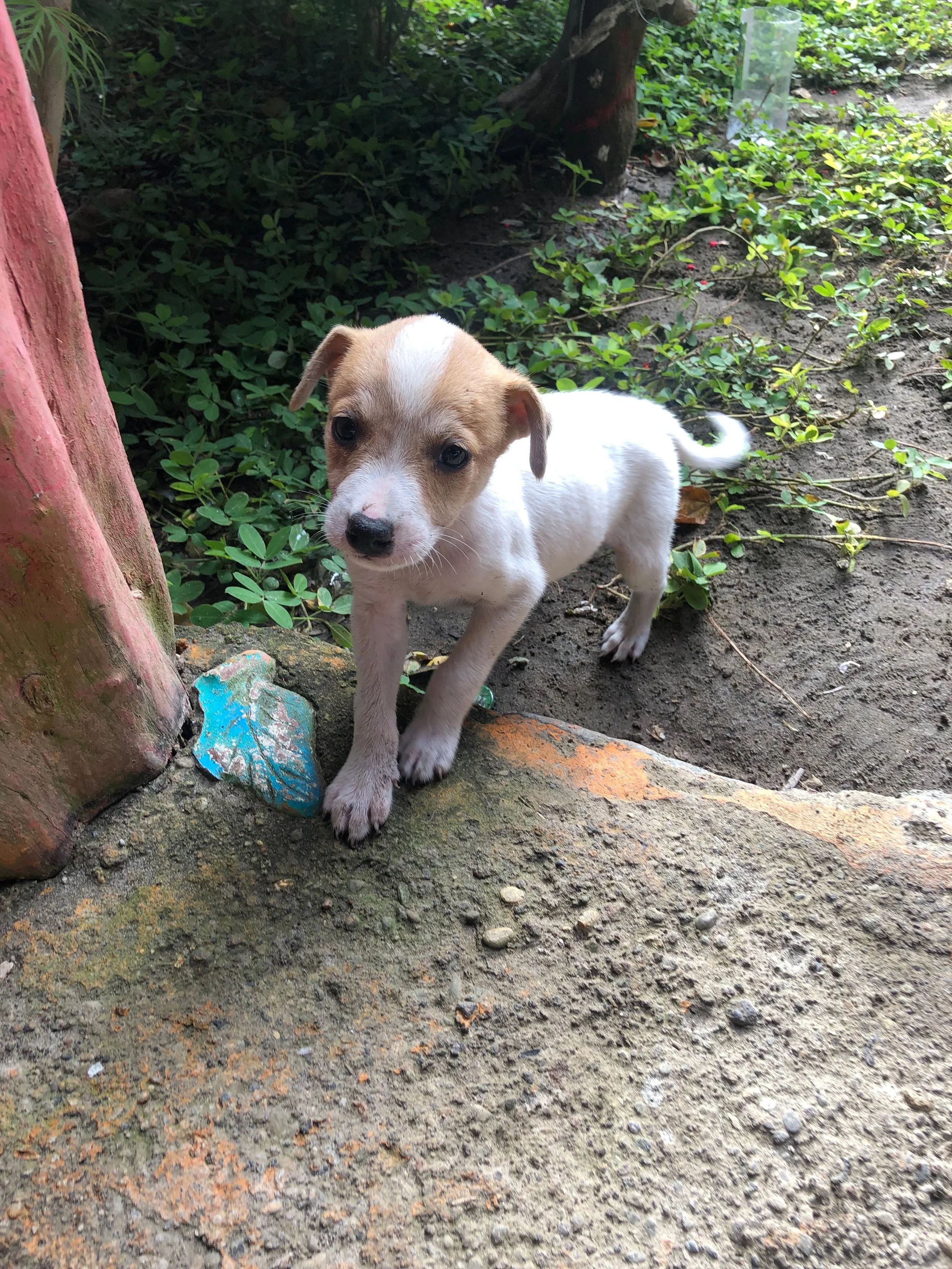
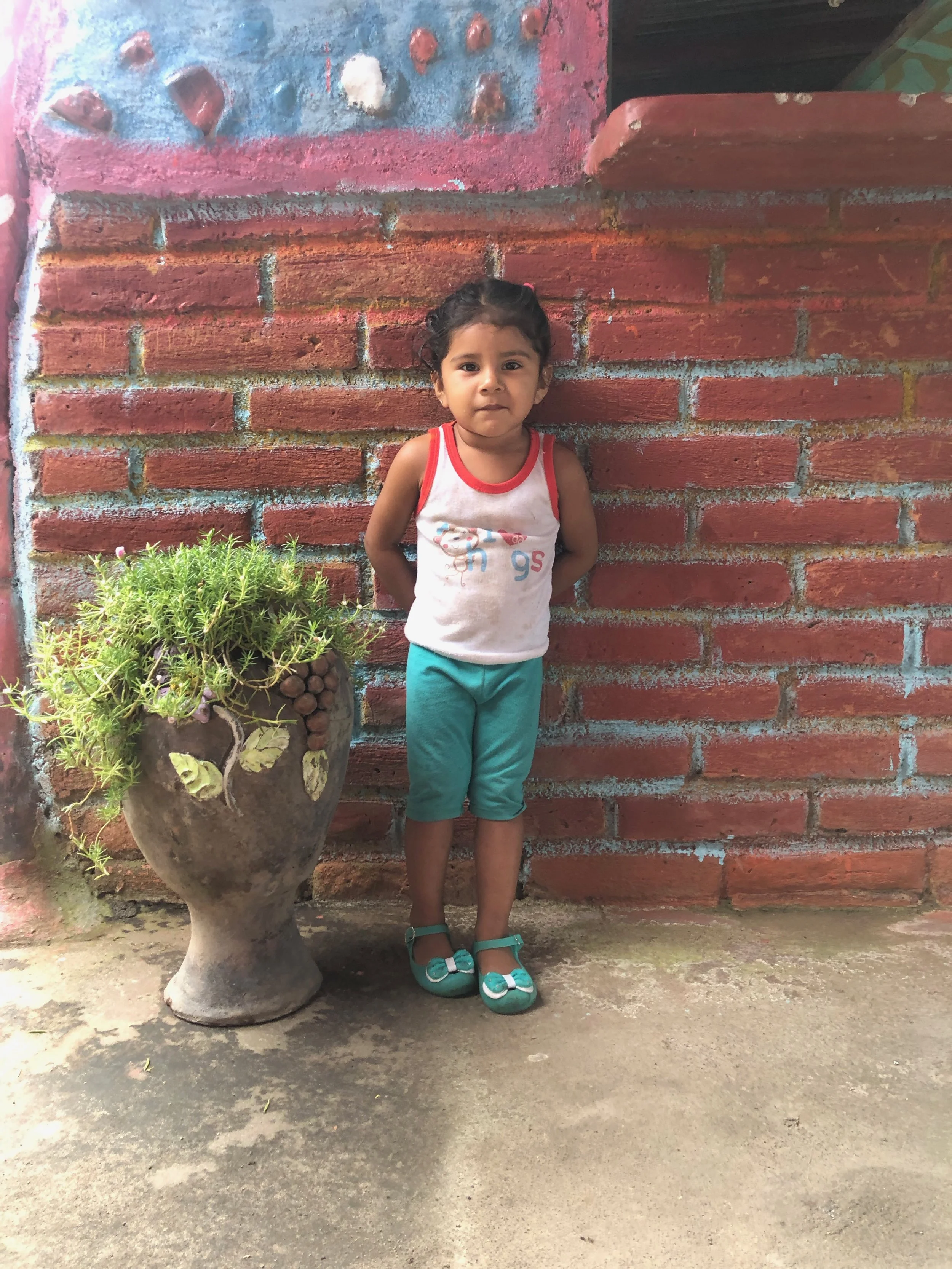
The daughter of the restaurant owner who let us use his beachfront
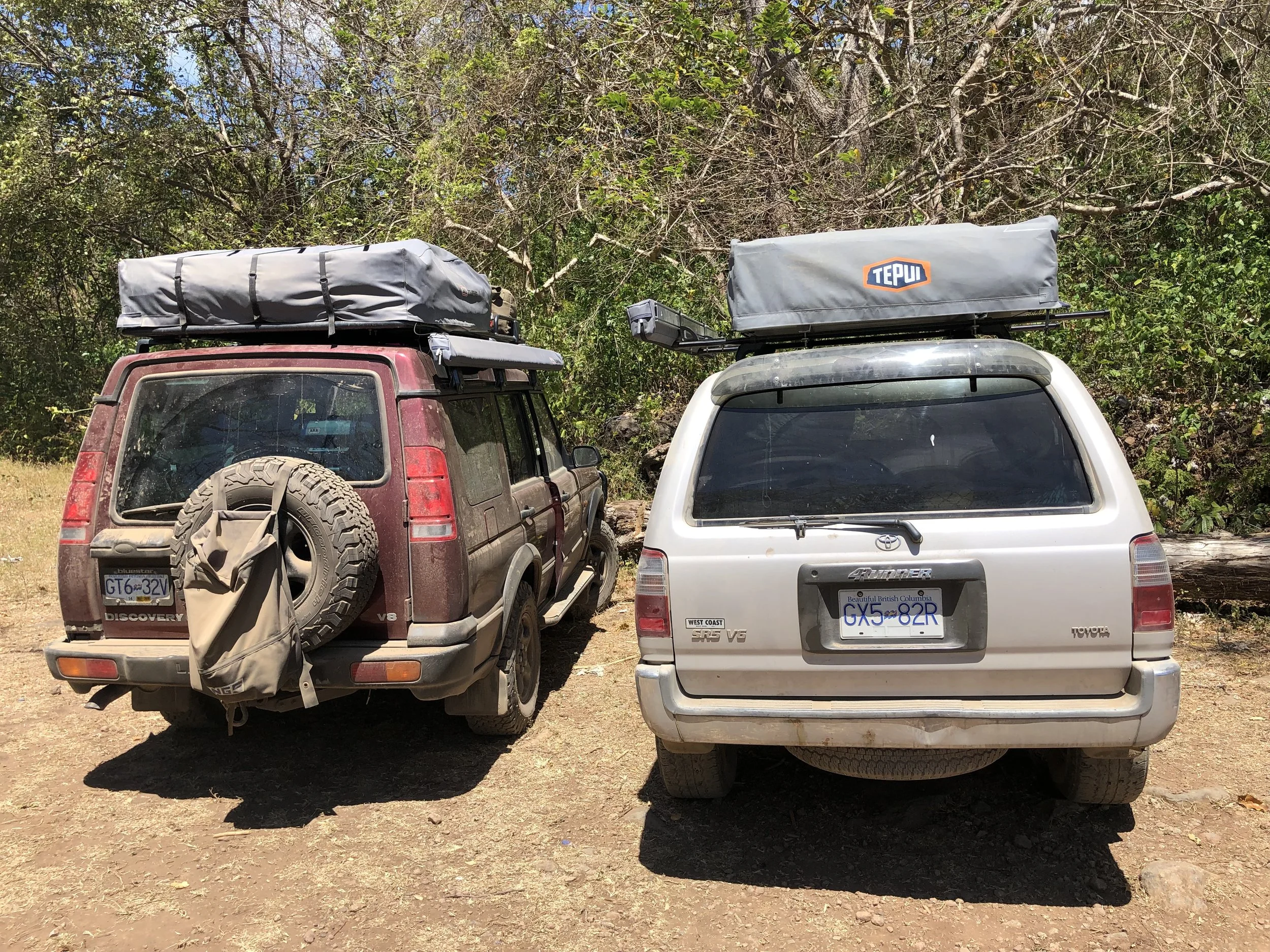
I ran into a couple with British Colombia plates at a waterfall. If was so excited to meet them and find out about their trip, having covered the same ground I had to get to Nicaragua
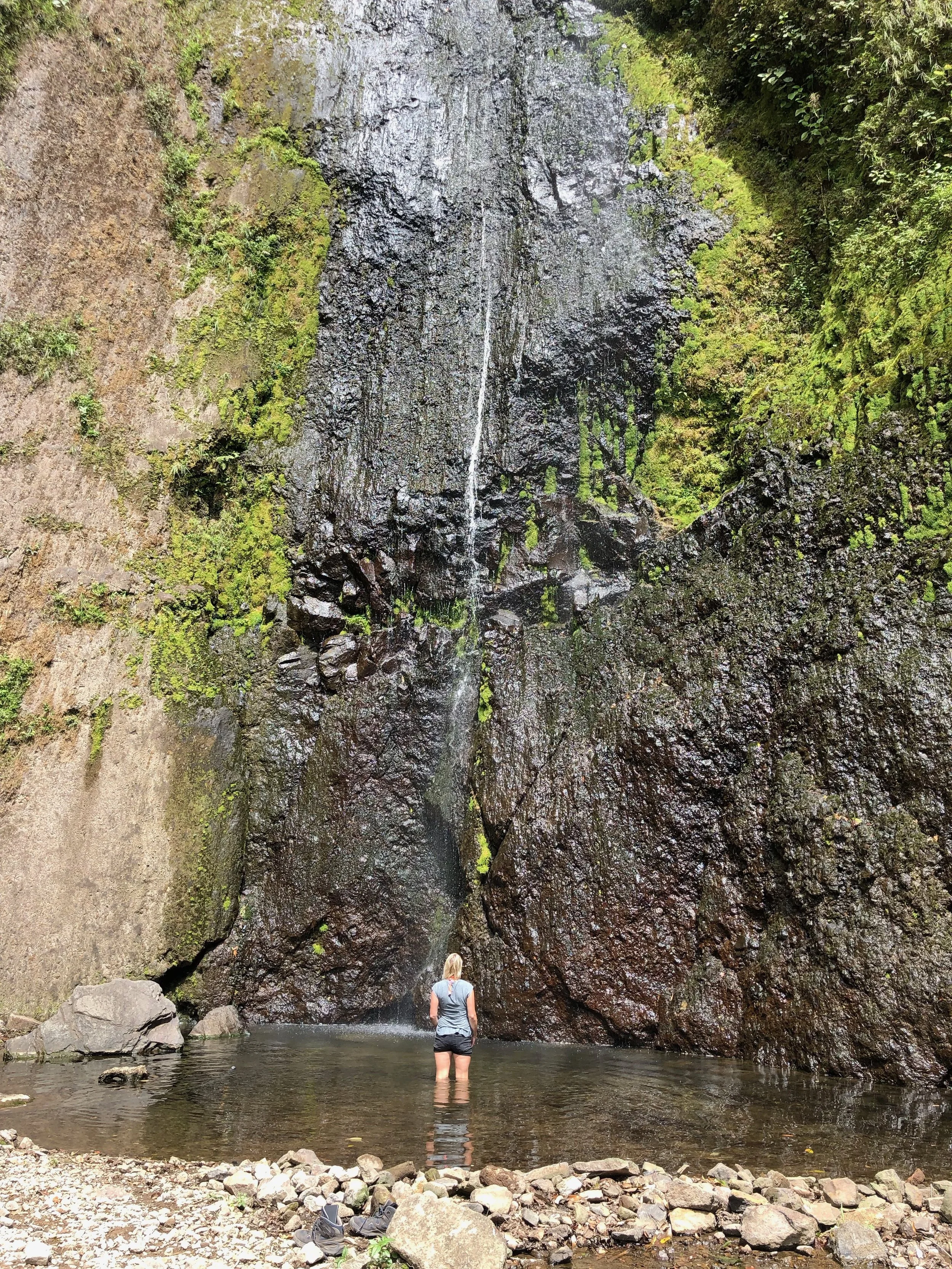
Slightly underwhelming Ometepe waterfall
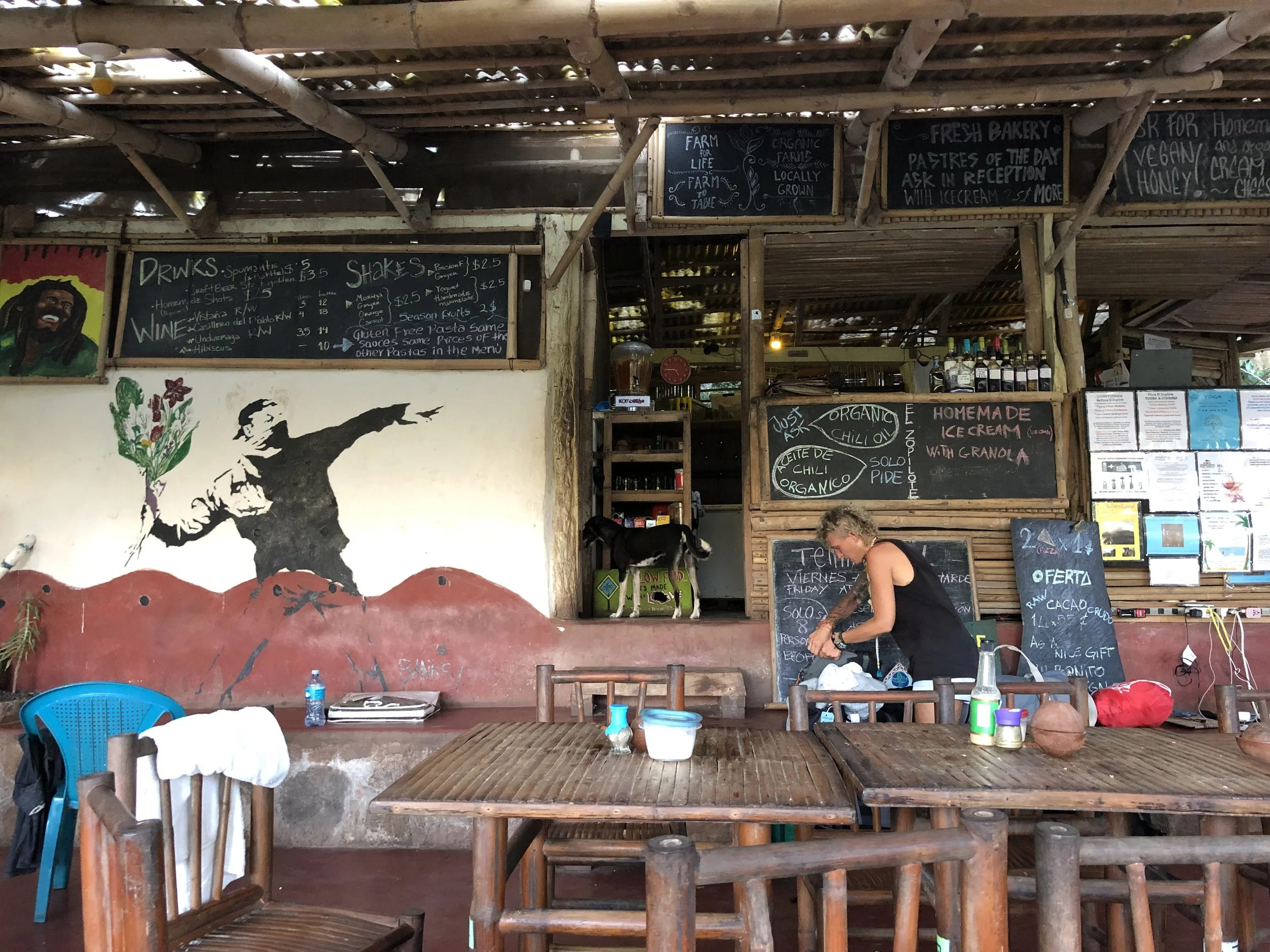
Zipolote hostel. Glad we didn’t stay there, a bit too hippy for me. But their food was great
San Juan del Sur:
Leaving Ometepe via ferry, Dajana and I head across Lake Nicaragua and across the small stretch of land to the Pacific coast to a small beach town called San Juan del Sur, popular with surfers who use it as a base to explore the surf beaches along the Nicaraguan coast. After some days on the beach and with only the most basic amenities, we spring for the opulence of a US$50 a night hotel as a little treat.
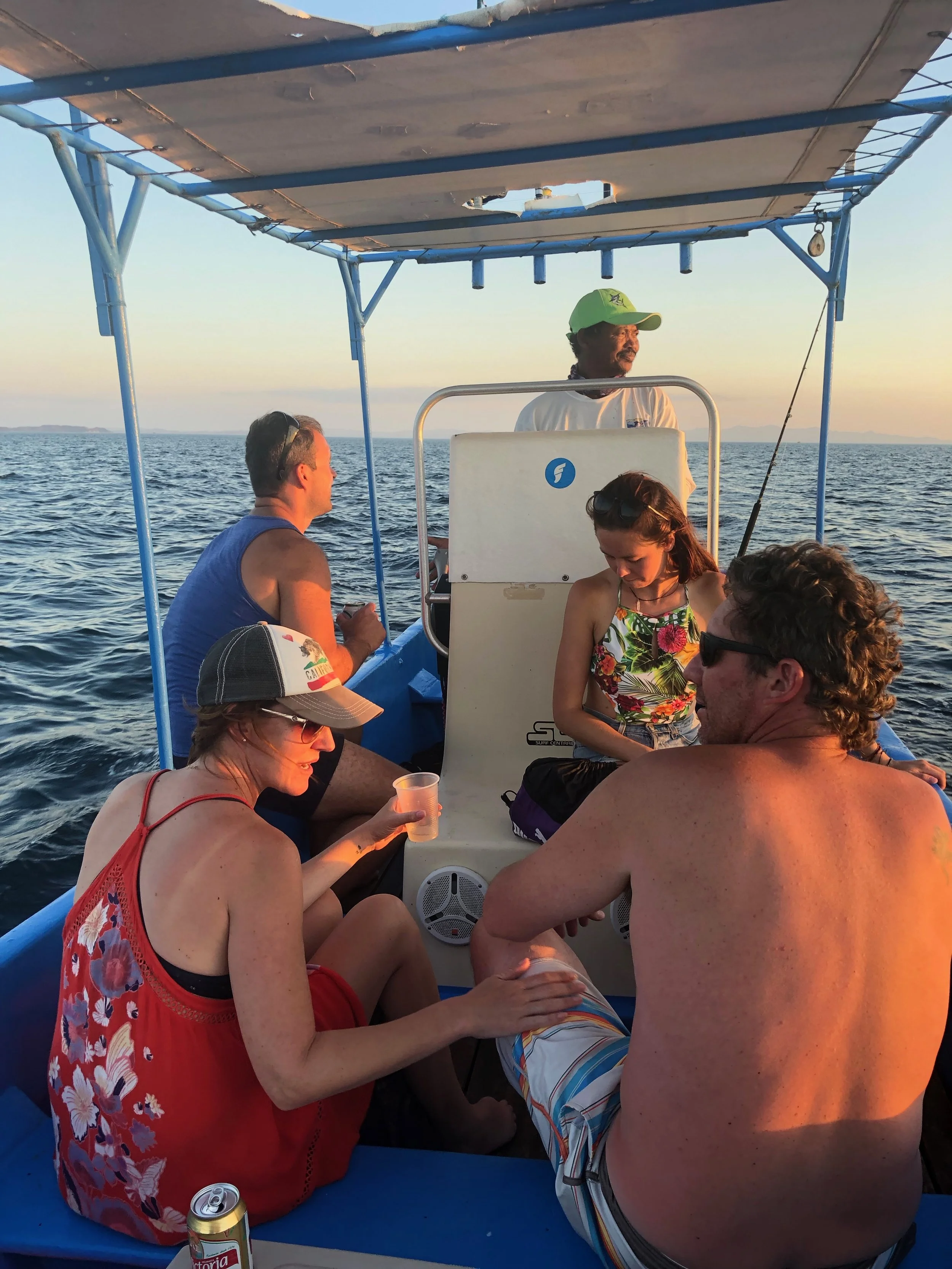
On a walk to the beach, we stumble into a fishing charter about to head off and for a very modest sum, join four other backpackers for a few hours of fishing. Anne-Marie and Ian, the Irish couple who have never fished before, pull in the biggest fish of the day and I take great pleasure in seeing people get excited about a past-time that has really captivated me in the past few years. We have the fish cleaned and cooked by a restaurant on the beach and enjoy our fresh catch after an amazing Pacific sunset.
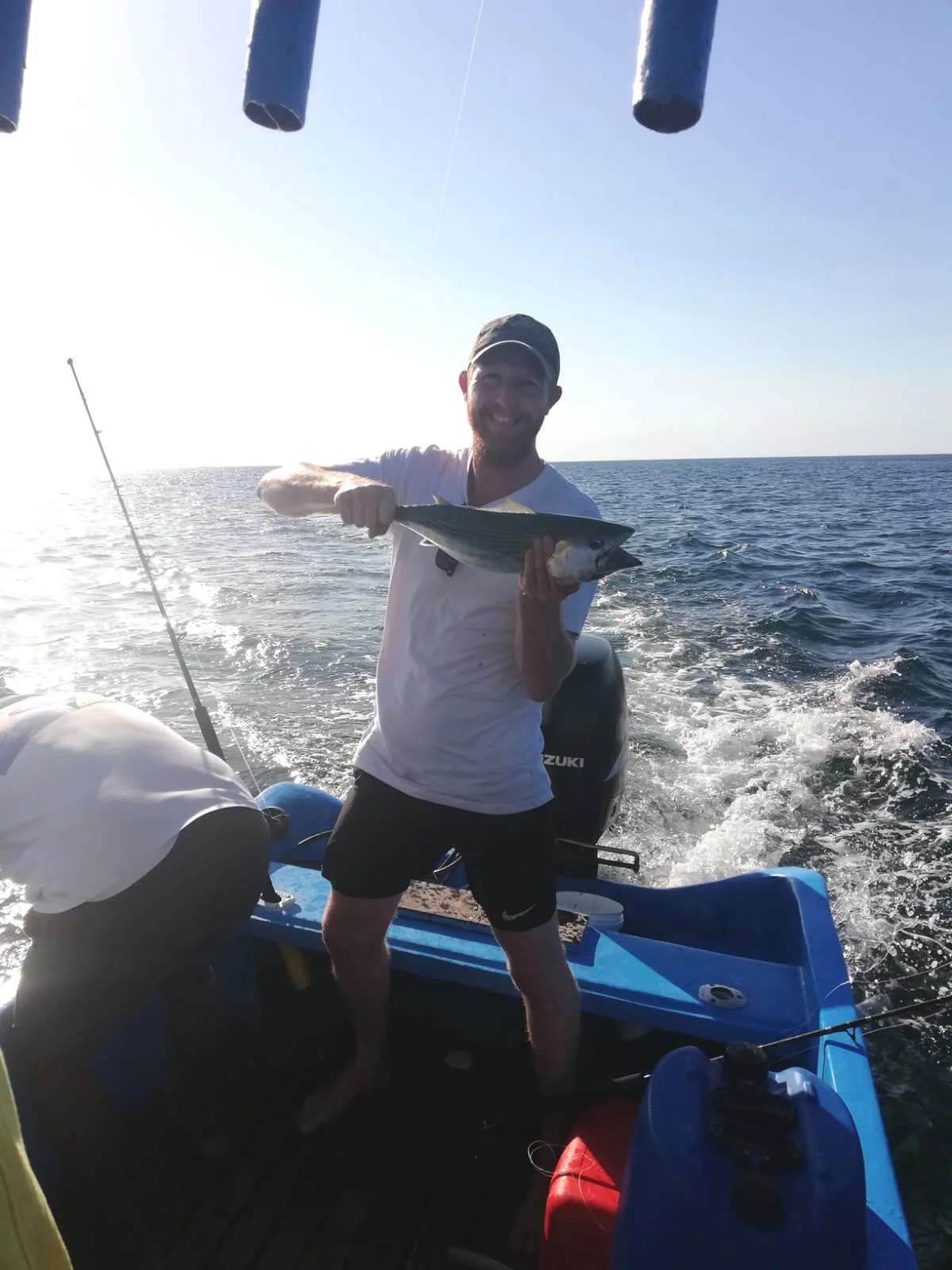
Fishing in San Juan del Sur
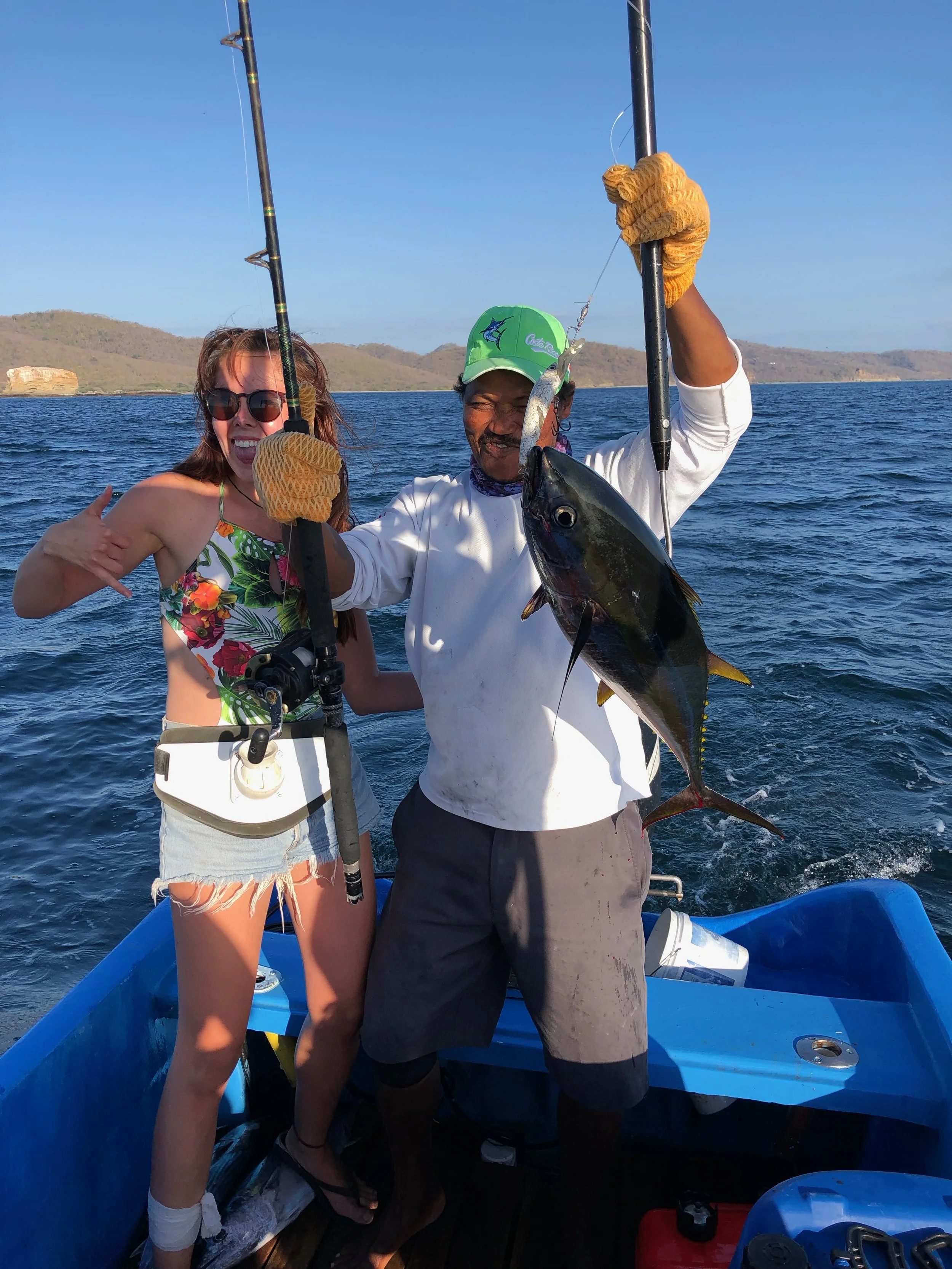
Anne-Marie from Ireland pulled in her first ever fish and biggest fish of the day
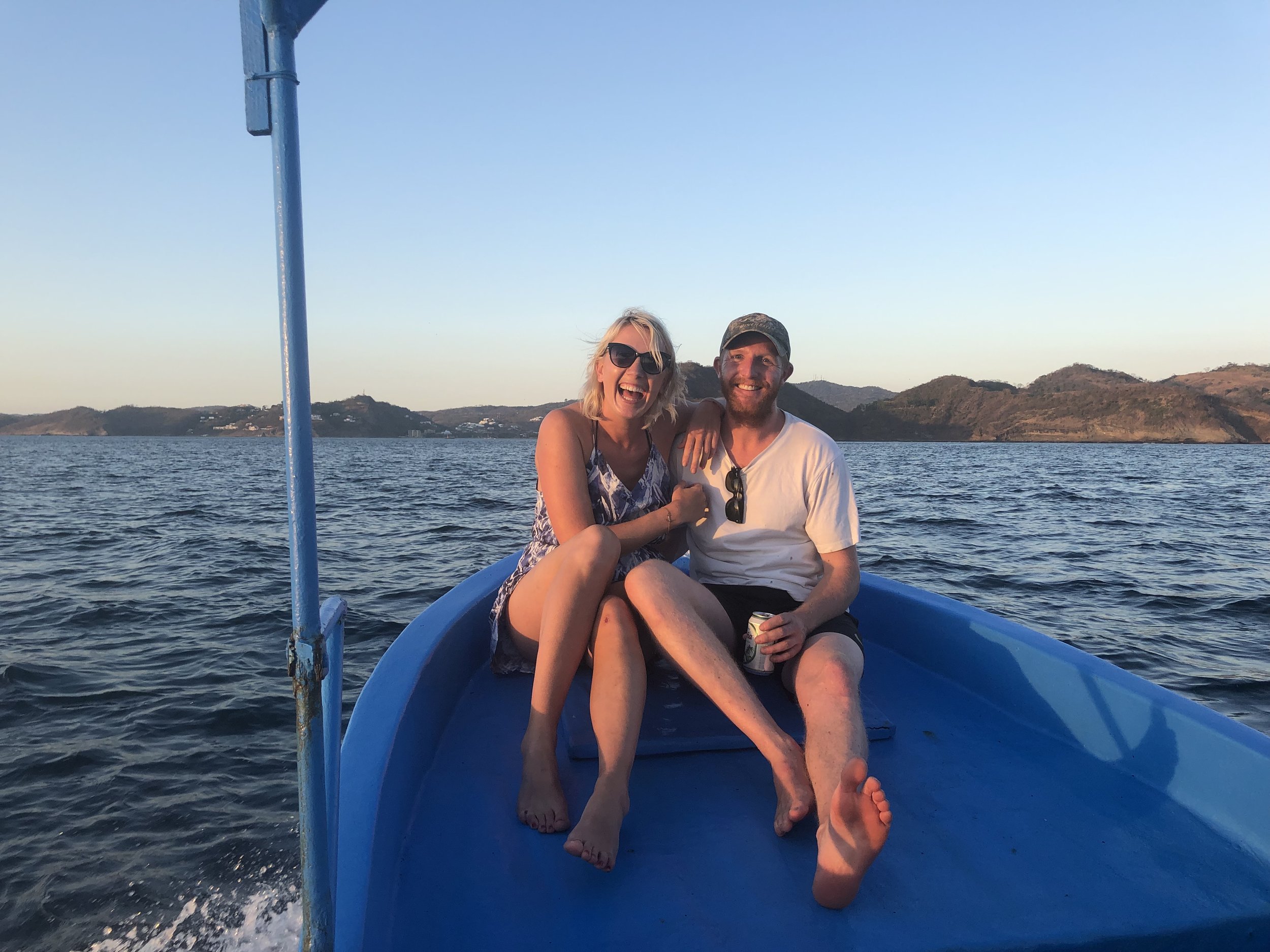
Dajana and I off San Juan del Sur
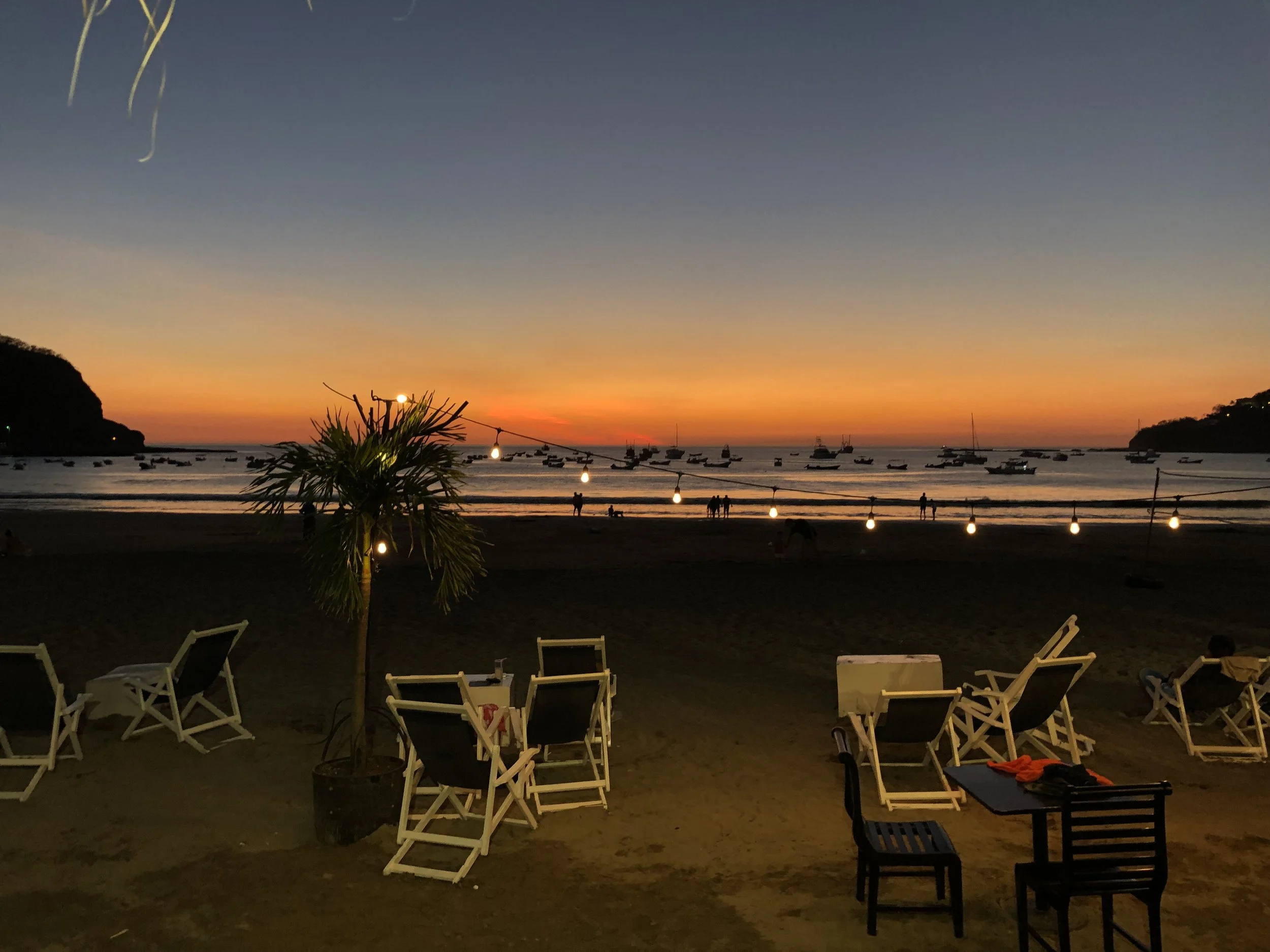
San Juan del Sur beach view. We sat here and ate the fish we caught earlier that day
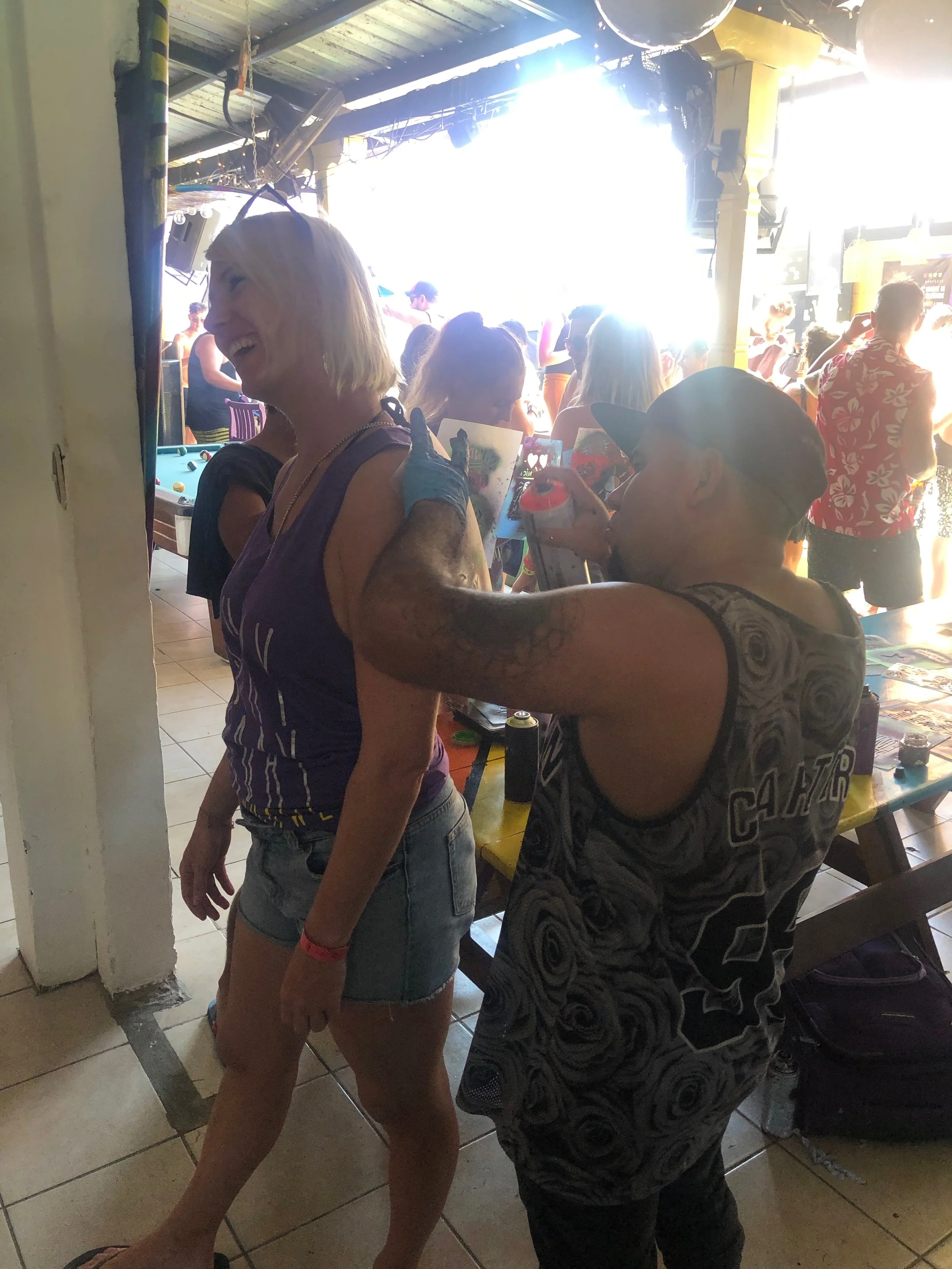
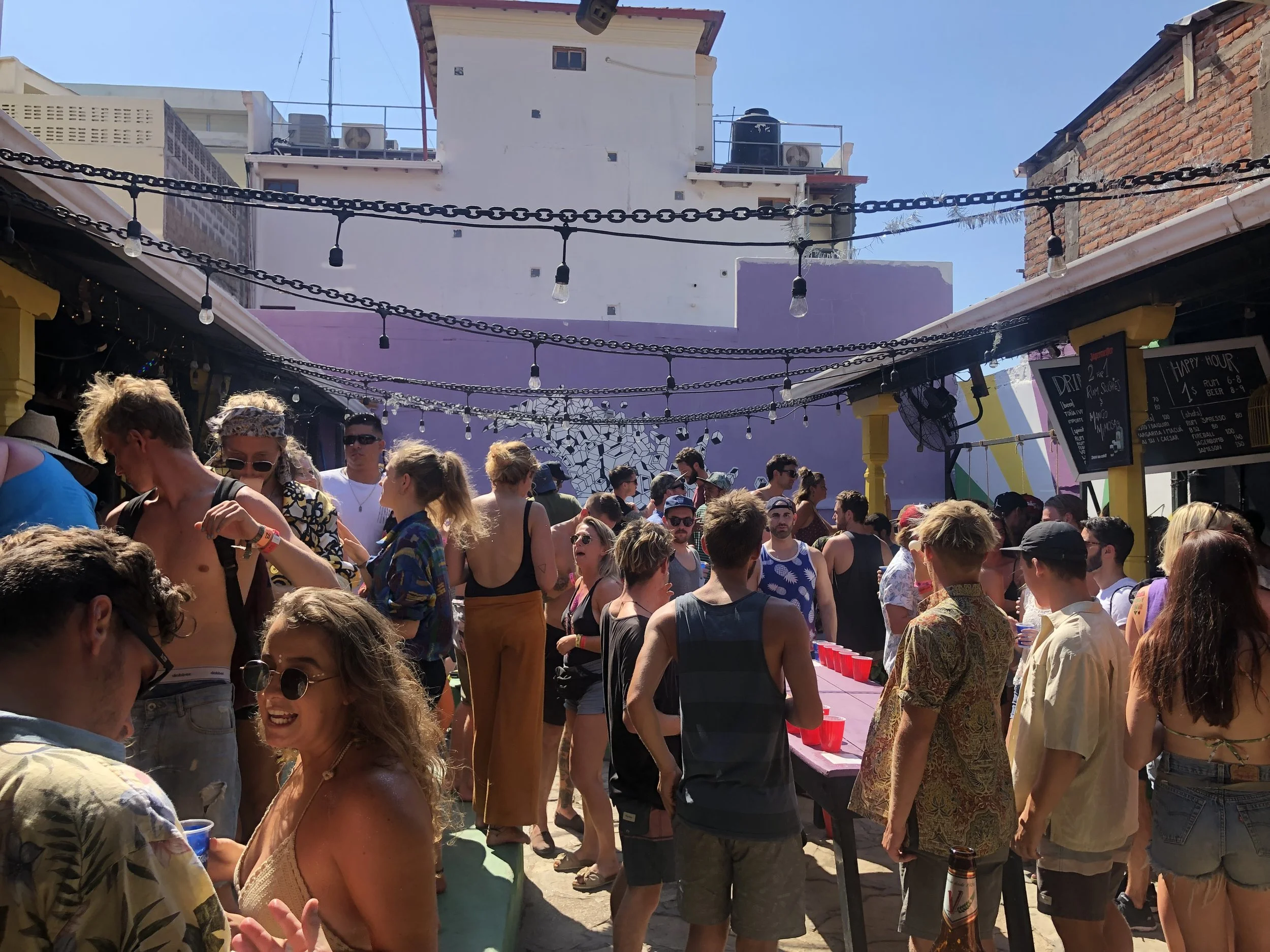
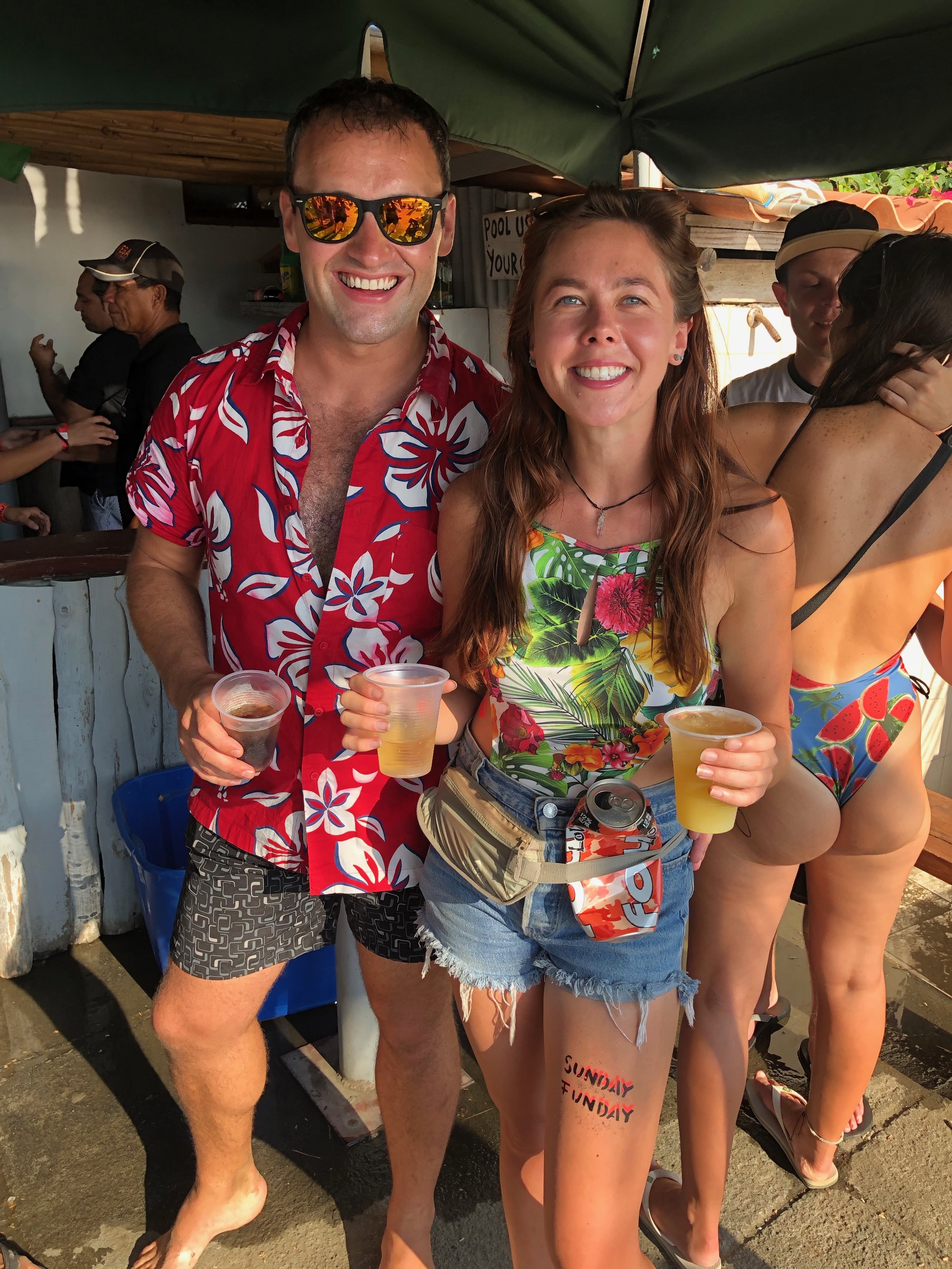
The final treat Nicaragua had in store for us was Sunday Funday. It would seem that most people try to plan their path through the area to include a Sunday in San Juan del Sur as one of the major events to do while in Nicaragua. Sunday Funday is basically a pub crawl between four different hostels around the town. In short, a debaucherous backpacker piss-up. Memories are sketchy from the day but highlights/lowlights include having my bag stolen from one of the hostels (or perhaps being a little too drunk to remember where I put it), a skinny dip at the beach at the end of the night and (I can’t confirm for sure) potentially pissing into my duffle bag of clothes in the hotel once I got home (lacking the certainty as to how my clothes became damp and having this as a plausible explanation, I had the whole thing washed just in case).
Ian and Anne-Marie, our Irish friends
My time with Dajana was the first significant ‘holiday relationship’ during this adventure. While I’d previously resolved not to talk about the romances on my journey, I don’t see how I can avoid it. The journey is about the people as much as anything and the relationships I’ve had, and will have, on the road have been a fundamental part of my travels. And given a lot of the pictures during this time have Dajana in them, it’s hard to avoid addressing the topic.
It would seem that time on the road goes feels so much longer than in normal life which is to say that a two-week relationship on the road feels like two months. Looking back, it’s hard to believe that it was as short as it was. I also found it funny when we’d show up to a place together and people assume you’ve been together for years and when they ask the question ‘how long have you been together?’ and the answer is ‘oh, about a week’, I always found it quite amusing.
In all, it was less than three weeks between meeting and parting ways. In that time, we spent time in across Semuc Champey, Antigua, climbed Mount Acatenango, Leon, Ometepe and San Juan del Sur. We made a great travel team for the time we were together. Ultimately, I was moving faster than her and she stayed back in Nicaragua for a while longer before headed back to Germany. And I had a date with a mechanic in Costa Rica and a shipping date for my car to Colombia that I couldn’t miss.